The best audio interfaces depend on whether you need a straightforward path for guitar and vocals, mobile recording, or hands-on podcast controls. These options cover setups for recording, streaming and podcasting.
Quick Top Products
MAONO PS22 Lite USB Audio Interface
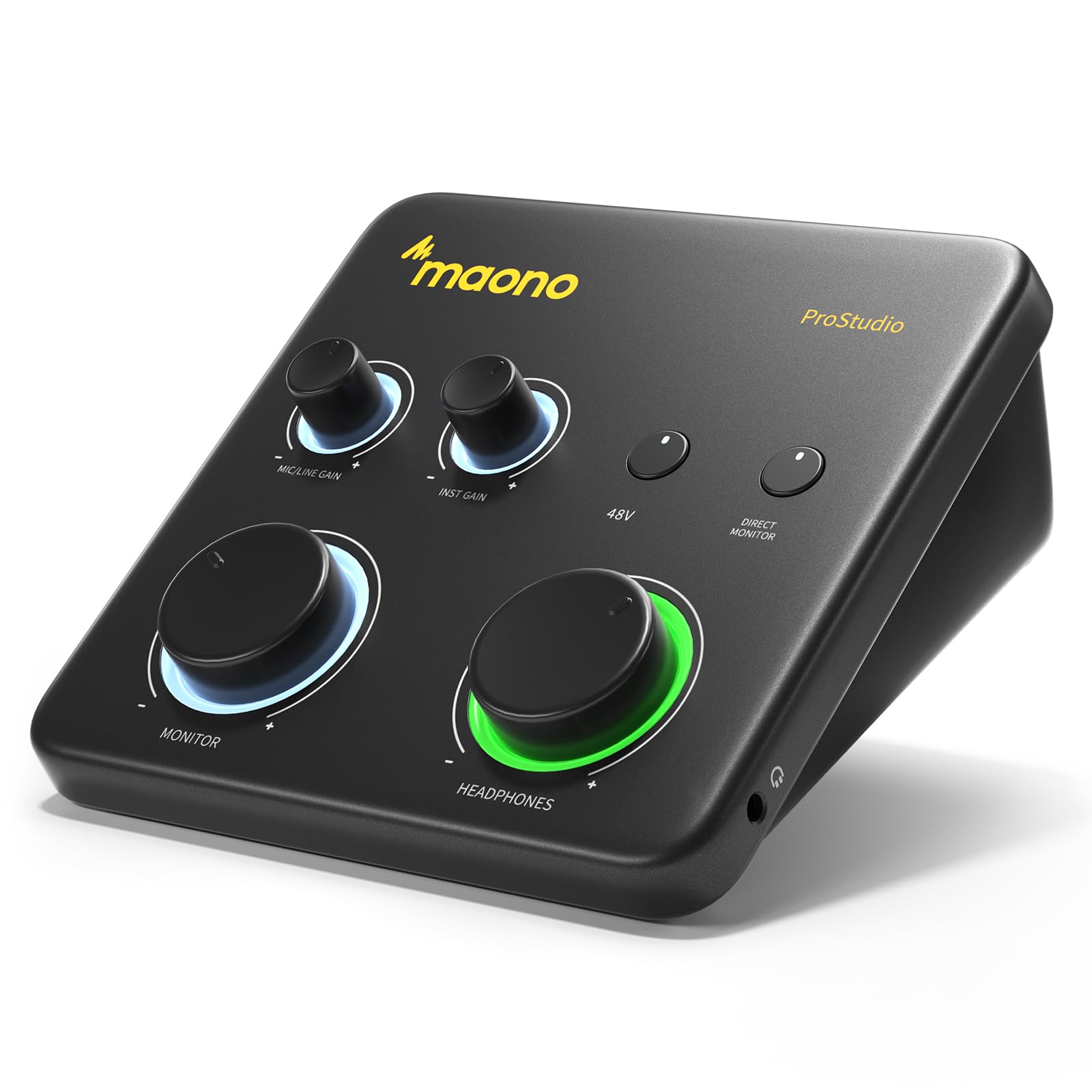
- Records at 24-bit/192kHz and includes a dedicated instrument input.
- Supports condenser and dynamic microphones with up to 56 dB gain and 48V phantom power.
- ProStudio Routing Software adds virtual channels and loopbacks for streaming.
Best For: Home musicians and creators who want compact recording with instrument input and software routing.

MAONO P1 USB Audio Interface
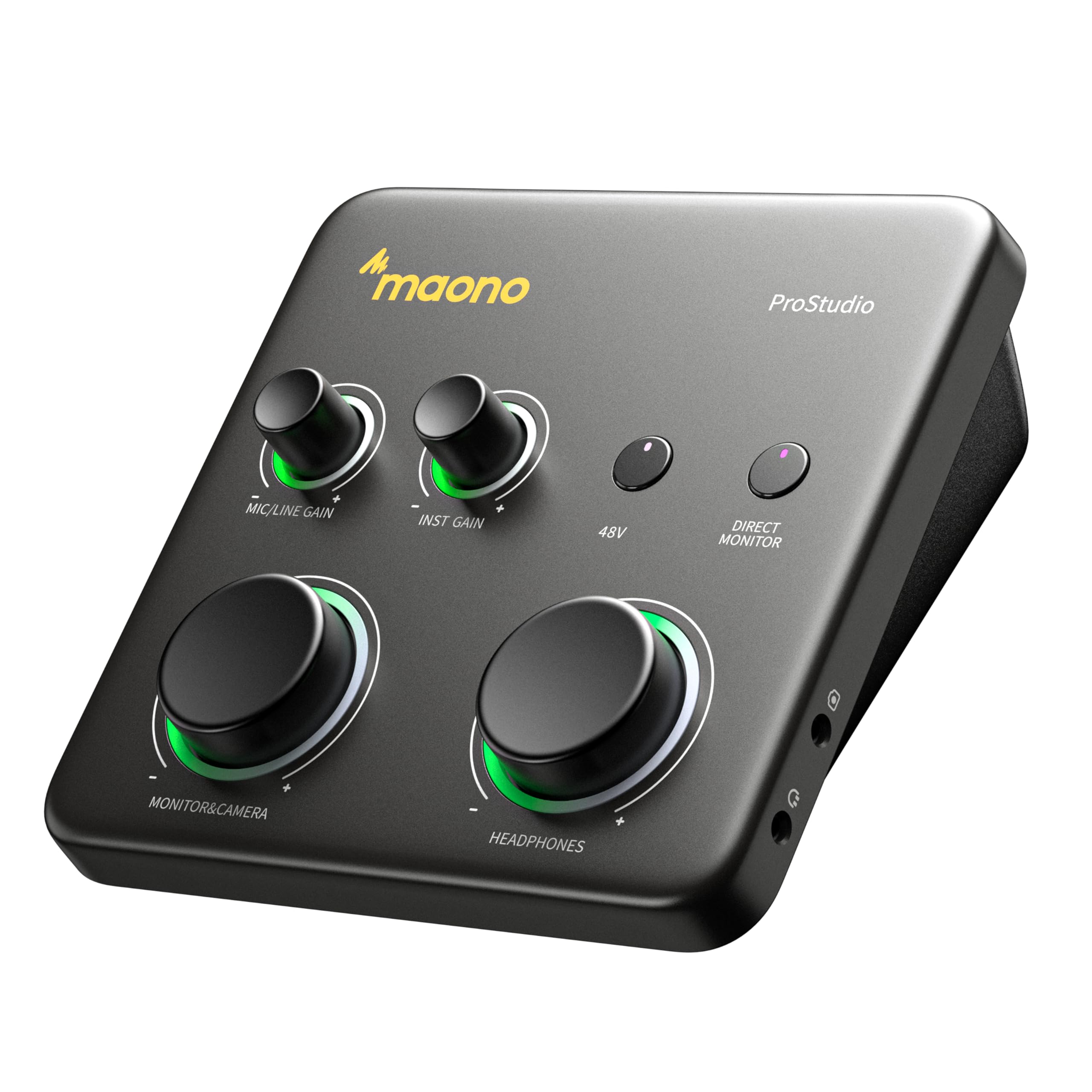
- Connects a computer and phone or iPad simultaneously through dual USB ports.
- Offers up to 70 dB gain and 24-bit/192kHz recording.
- Includes Auto-Gain, direct monitoring and built-in loopback.
Best For: Solo creators recording dynamic microphones while switching between computer production and phone streaming.
MAONO P2 Hybrid USB Audio Interface
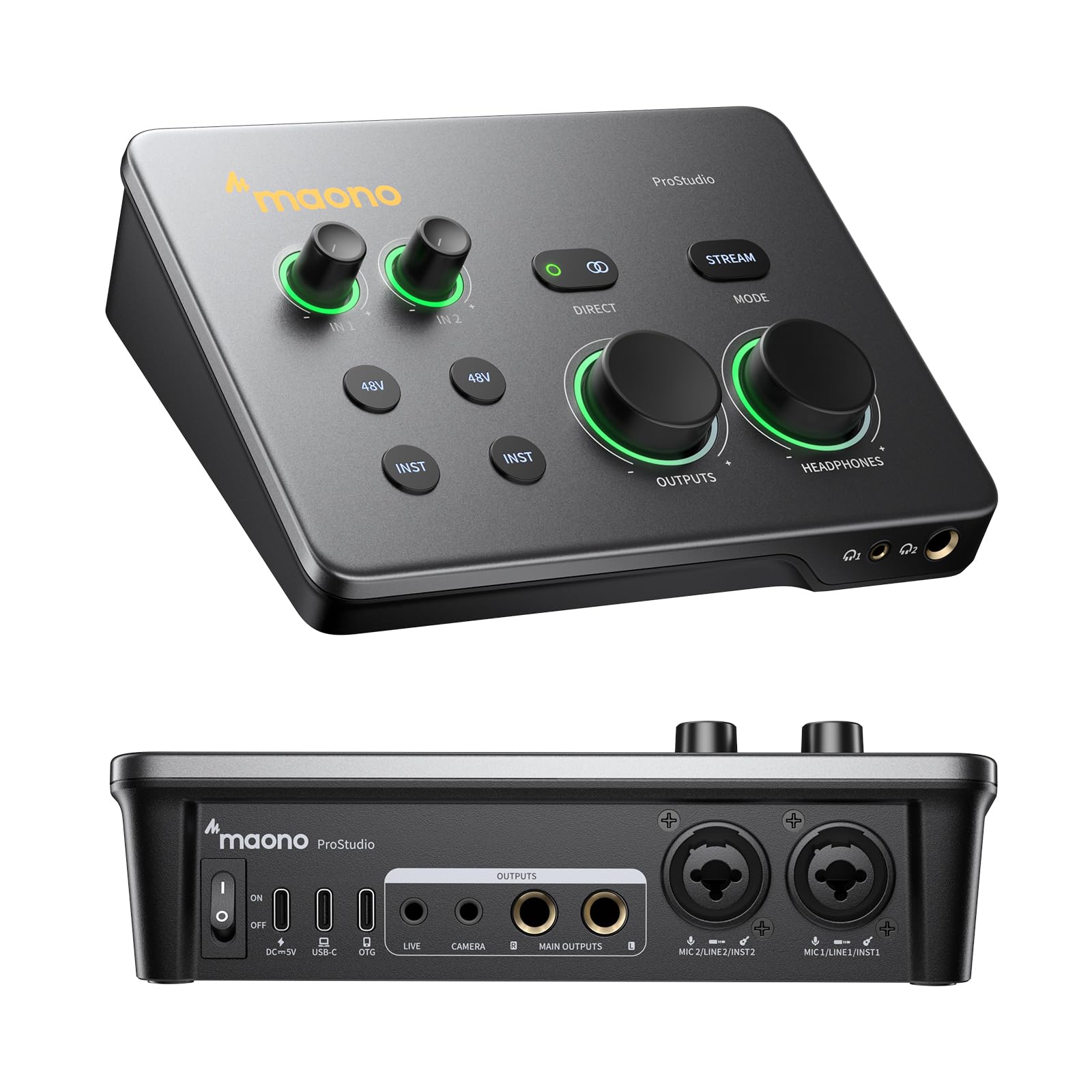
- Dual USB ports support simultaneous computer and phone or iPad connections.
- Has dual XLR inputs and supports up to 56 dB gain with 24-bit/192kHz recording.
- Direct monitoring, loopback and independent mute controls support recording and streaming.
Best For: Creators who want two XLR microphone inputs and simultaneous computer and mobile connectivity.
MAONO E2 Gen2 Podcast Equipment Bundle
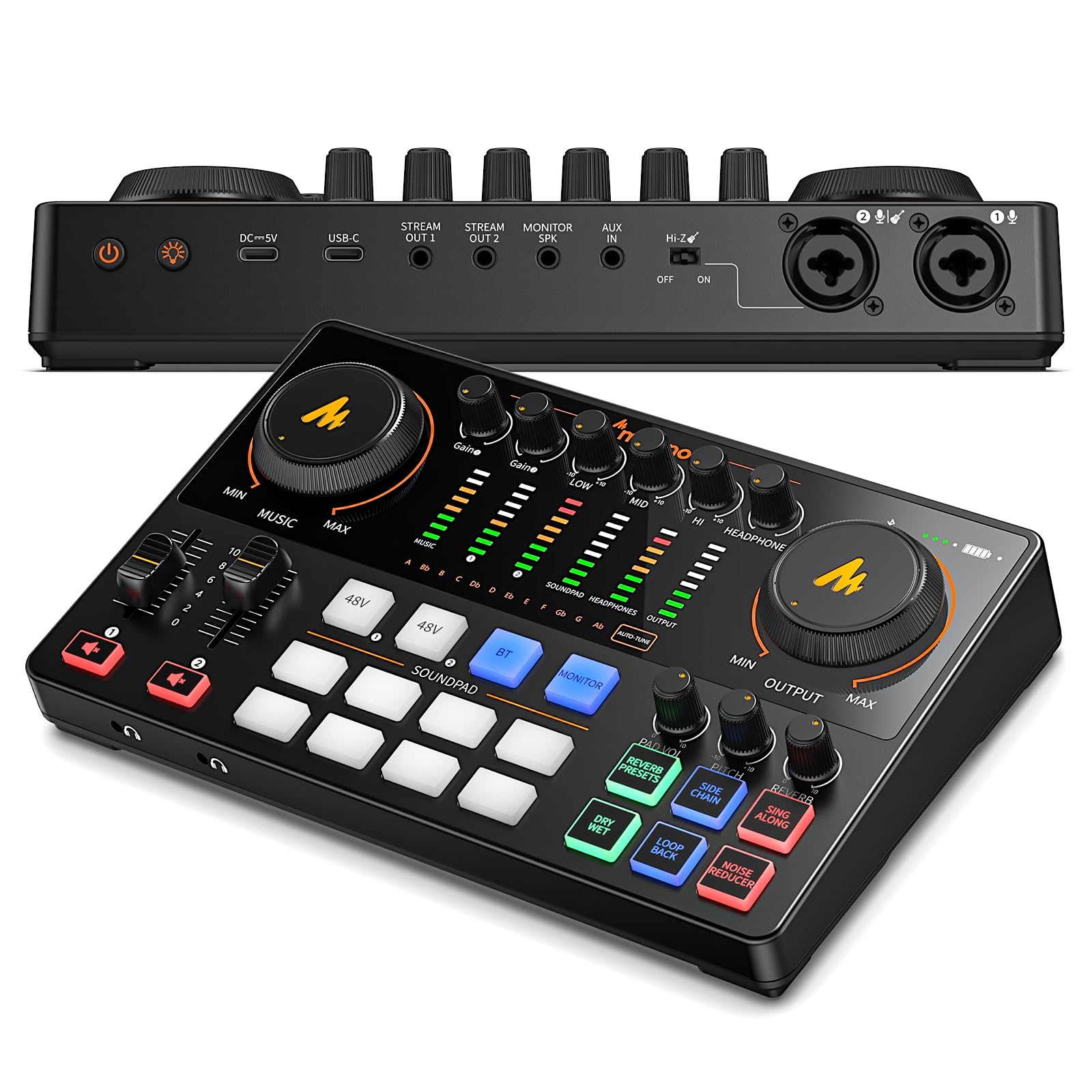
- Two XLR combo inputs and preamps provide up to 60 dB gain.
- Eight customizable sound-effect buttons support up to 20 seconds each.
- A built-in 1500mA battery is rated for up to eight hours of use.
Best For: Podcast co-hosts who want dual XLR inputs, onboard sound effects and a portable mixer.
MAONO MaonoCaster AME2 Audio Interface
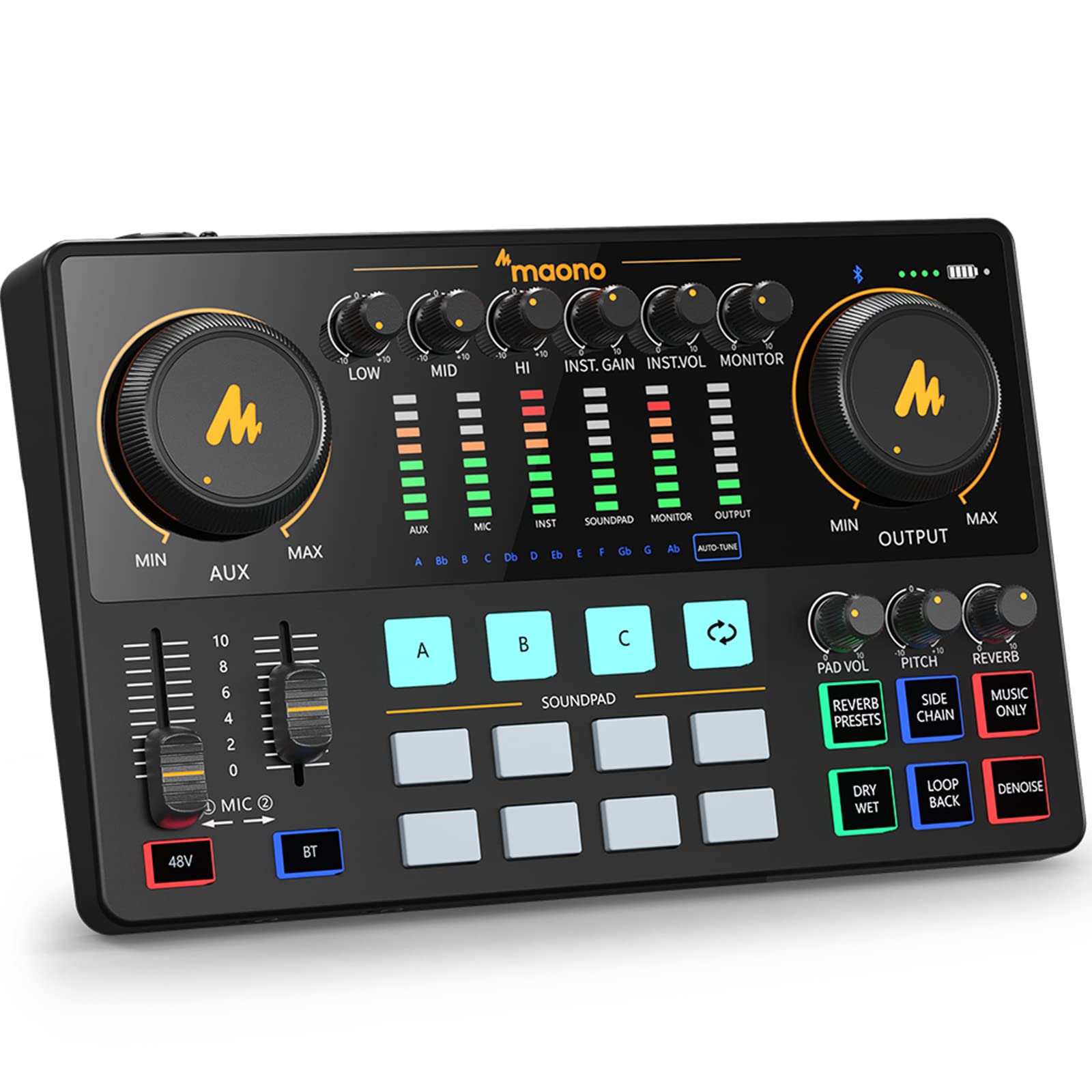
- Offers up to 60 dB gain and 48V phantom power for XLR microphones.
- Includes 11 customizable sound pads, with recording lengths varying by pad.
- Accepts guitar or bass through a 6.35mm instrument input.
Best For: Solo podcasters and streamers who want customizable sound pads alongside guitar or bass input.
Compact Home Studio Interface
MAONO PS22 Lite USB Audio Interface for PC: Interface with XLR Input 24-bit/192kHz Routing Software LOOPBACK ASIO Driver for Recording Music, Home-Studio, Guitar, Podcast, Streaming, DAW(Black)
The MAONO PS22 Lite combines an XLR microphone input with a dedicated instrument input, making it a practical fit for recording guitar and vocals through a computer. It supports 24-bit/192kHz recording, 48V phantom power and up to 56 dB of preamp gain.
ProStudio Routing Software adds virtual channels and loopbacks for streaming, while ASIO driver support is intended for low-latency output. The compact design and direct monitoring switch keep the setup approachable.
Its focus is a single-interface computer workflow, so check whether its inputs cover the number of performers you plan to record at once.
Best For: Home musicians and creators who want compact recording with instrument input and software routing.
| Pros | Cons |
|---|---|
|
|
Choose the PS22 Lite if you want a small computer-centered interface for guitar, vocals or streaming, with software routing included. Its dedicated instrument input and phantom-powered XLR support make it more versatile for music recording than a mixer focused on podcast sound pads.
Before buying, check how many separate microphone inputs your sessions require; the available details do not state a count. Also confirm your computer or iPad connection needs and DAW setup, particularly the MAONO ASIO driver selection.
High-Gain Mobile Creator Interface
MAONO P1 USB Audio Interface with 70dB Gain for PC, Phone, iPad & Guitar
The MAONO P1 is built around a flexible creator workflow: dual USB ports with MFi-certified connectivity can connect a computer and phone or iPad simultaneously. It offers up to 70 dB of gain for dynamic microphones, plus 24-bit/192kHz recording and direct monitoring.
Auto-Gain is designed to set microphone level for voice capture, while built-in loopback and ProStudio2 software support routing desktop audio and effects. The compact interface has a 15° tilt and zinc-alloy housing.
If your setup needs two XLR microphones at once, check the input count before choosing; that detail is not included in the supplied specifications.
Best For: Solo creators recording dynamic microphones while switching between computer production and phone streaming.
| Pros | Cons |
|---|---|
|
|
Pick the P1 if mobile and computer recording are both part of your routine, or if your dynamic microphone benefits from its up-to-70 dB gain. Its Auto-Gain, loopback and routing software lean toward streaming and creator workflows as well as recording.
The tradeoff is that the supplied details do not identify the number of XLR inputs, so check that before planning a two-microphone session. Confirm your intended phone, tablet and computer connections, too.
Dual-XLR Hybrid Recording
MAONO P2 Hybrid USB Audio Interface Dual XLR for PC Phone iPad Guitar
The MAONO P2 pairs dual XLR inputs with two USB ports, allowing a computer and phone or iPad to connect simultaneously. It supports up to 56 dB of gain and 24-bit/192kHz recording, with direct monitoring for hearing inputs during a take.
Loopback and the ProStudio 2 software support routing instrument, voice and desktop audio for recording or streaming. Independent mute controls and signal indicators add hands-on control, while its 15° tilt is intended to keep controls accessible on a desk.
This interface suits a hybrid creator setup; check whether its gain range works for your particular microphone before purchase.
Best For: Creators who want two XLR microphone inputs and simultaneous computer and mobile connectivity.
| Pros | Cons |
|---|---|
|
|
Choose the P2 when two XLR inputs and a simultaneous computer-plus-mobile workflow matter. It includes direct monitoring, loopback and separate mute controls, which suit recording and live streaming from the same desk.
Also check which connections and routing features your preferred software requires.
Two-Mic Podcast Mixer
MAONO Podcast Equipment Bundle: Audio Interface mixer with Dual XLR Input for Podcast Streaming - MaonoCaster E2 Gen2
The MAONO E2 Gen2 combines a dual-XLR podcast mixer with creator controls aimed at co-hosted shows and streaming. Its two XLR combo inputs have preamps with up to 60 dB of gain, and eight customizable sound-effect buttons each support up to 20 seconds of recording.
Loopback helps manage a one-computer live-stream setup, while the one-touch mute button and six reverb presets add convenient on-device controls. A built-in 1500mA battery is rated for up to eight hours of use.
This is a podcast-oriented all-in-one option; check that its mixer features and connections suit your DAW-based music workflow.
Best For: Podcast co-hosts who want dual XLR inputs, onboard sound effects and a portable mixer.
| Pros | Cons |
|---|---|
|
|
The E2 Gen2 is a strong match for co-hosted podcasts or streams where two XLR microphones, quick muting and onboard sound effects are useful. Its battery and phone, tablet and computer connections can suit a more flexible creator setup.
The tradeoff is its podcast-mixer orientation, with sound pads and reverb central to the feature set. If you mainly record instruments into a DAW, check its instrument connections and software workflow before choosing it over a simpler computer interface.
Sound-Pad Podcast and Guitar Mixer
MAONO Audio Interface, MaonoCaster 10-Channel Podcast mixer with Pro-preamp, 48V Phantom Power, Bluetooth, 11 Customize sound pads for Recording, Streaming, Youtube, TikTok, PC, Guitar (AME2)
The MAONO MaonoCaster AME2 is a 10-channel podcast mixer with features for live streaming, voice recording and instrument input. Its preamps offer up to 60 dB of gain, with 48V phantom power for condenser microphones, and it accepts guitar or bass through a 6.35mm instrument input.
Eleven customizable sound pads, six reverb modes and loopback switches provide hands-on control for a show or stream. The connection options include USB-C for a computer or tablet and live outputs for a smartphone.
USB microphones are not supported, so check your microphone connection before buying.
Best For: Solo podcasters and streamers who want customizable sound pads alongside guitar or bass input.
| Pros | Cons |
|---|---|
|
|
Choose the AME2 if you want a desk-based podcast mixer with sound pads and effects, while keeping a guitar or bass input available. Its up-to-60 dB preamps and 48V phantom power support compatible XLR microphones, and its live outputs can feed a smartphone streaming setup.
The tradeoff is that it is more control-rich than a straightforward recording interface, and it does not support USB microphones. Confirm your microphone type and whether you need its mixer functions.
How to Choose Audio Interfaces
How We Picked Audio Interfaces
These options fit audio recording, streaming or podcast workflows, spanning compact computer interfaces, hybrid mobile connections and hands-on podcast mixers. They offer distinct setups: the PS22 Lite pairs an instrument input with software routing, the P1 and P2 offer dual USB connectivity, and the E2 Gen2 and AME2 emphasize onboard podcast controls.
Input type and workflow matter more than a long feature list. Check whether you need one microphone or two, an instrument input for guitar, phantom power for a condenser microphone, or loopback for sending computer audio into a stream.
Comparing Audio Interfaces
The PS22 Lite is the compact computer-focused choice, with an instrument input and ProStudio routing software. The P1 and P2 share hybrid USB connectivity and creator-oriented routing, but the P2 specifies dual XLR inputs while the P1 highlights up to 70 dB gain and Auto-Gain.
The E2 Gen2 and AME2 add more mixer-style controls: the E2 has two XLR combo inputs and a battery, while the AME2 offers 11 sound pads and guitar or bass input.
For music recording, compare the microphone and instrument connections with the way your DAW handles inputs. For streaming, loopback, mute controls and routing software can matter as much as the preamp.
Podcast mixers provide sound pads and effects on the device; those controls are useful when you want to trigger sounds without depending entirely on computer software.
| Product | Standout features | Best for |
|---|---|---|
| MAONO PS22 Lite USB Audio InterfaceCheck Price |
| Home musicians and creators who want compact recording with instrument input and software routing. |
| MAONO P1 USB Audio InterfaceCheck Price |
| Solo creators recording dynamic microphones while switching between computer production and phone streaming. |
| MAONO P2 Hybrid USB Audio InterfaceCheck Price |
| Creators who want two XLR microphone inputs and simultaneous computer and mobile connectivity. |
| MAONO E2 Gen2 Podcast Equipment BundleCheck Price |
| Podcast co-hosts who want dual XLR inputs, onboard sound effects and a portable mixer. |
| MAONO MaonoCaster AME2 Audio InterfaceCheck Price |
| Solo podcasters and streamers who want customizable sound pads alongside guitar or bass input. |
Choosing an Interface for Guitar and Vocals
If you plan to record guitar and vocals, look for a dedicated instrument input as well as the microphone connection. The PS22 Lite and AME2 explicitly include instrument inputs, with the AME2 specifying a 6.35mm jack for guitar or bass.
The E2 Gen2 also supports musical instruments, though its supplied details do not identify a dedicated instrument input.
For condenser microphones, confirm that the interface offers 48V phantom power. The PS22 Lite and AME2 specify it.
If you use a dynamic microphone, compare gain needs with the stated ranges: the P1 lists up to 70 dB, while the PS22 Lite and P2 list up to 56 dB and the AME2 and E2 Gen2 list up to 60 dB. These are maximum figures, so consider your microphone and recording distance.
Mobile Recording and Live Streaming
A hybrid interface can simplify a setup that moves between computer production and phone or tablet streaming. The P1 and P2 specify simultaneous computer and mobile connections through dual USB ports, while the AME2 includes smartphone live outputs.
Check device compatibility, required cables and the software routing you expect to use.
For a live show, direct monitoring helps you hear inputs while recording, and mute controls can be useful when changing instruments or managing a conversation. Loopback is relevant when you need to send desktop audio into a stream.
The P2, P1, PS22 Lite and E2 Gen2 mention loopback, though the control and software details differ across them.
Which Audio Interface Fits Your Setup?
Choose the PS22 Lite for a compact computer recording setup with an instrument input and software routing. Consider the P1 if higher stated gain and simultaneous computer/mobile connectivity suit your solo creator workflow, or the P2 if you need dual XLR inputs and the same kind of hybrid connection.
For co-hosted podcasts, the E2 Gen2 brings two XLR combo inputs, sound effects and battery operation. The AME2 suits streamers who want more sound pads, reverb and guitar or bass input, provided their microphones are not USB models.
Match the interface to your actual input count, microphone type and recording or streaming path before deciding.