The best XLR microphones depend on where you record, what equipment you already own, and whether you want USB controls or a straightforward analog connection. These options range from broadcast and podcast mics to handheld stage models, so check each microphone’s connection, included stand, and cable needs before choosing.
Quick Top Products
Samson Q9U
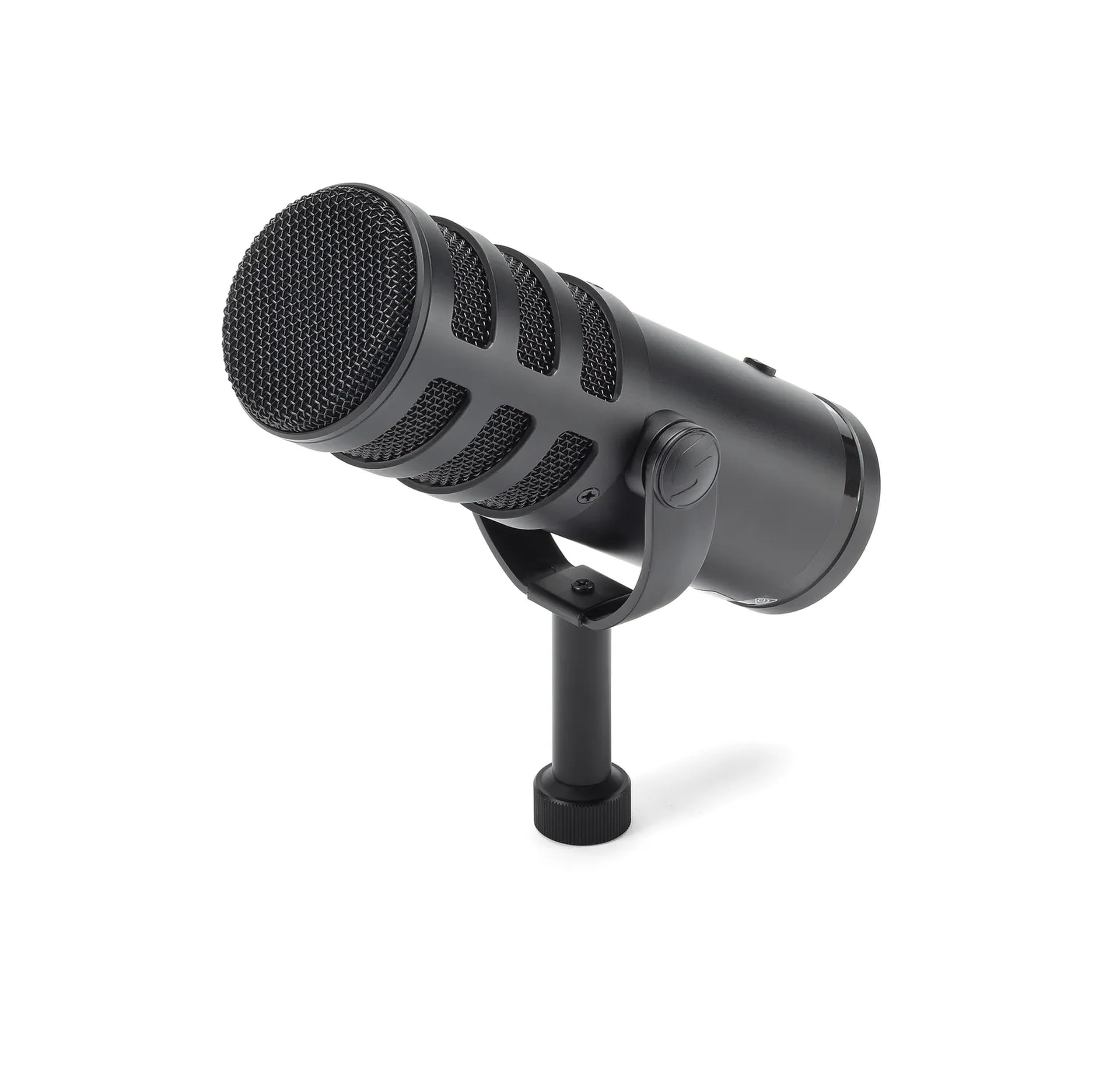
- Offers XLR analog and USB-C connections.
- Supports 24-bit/96kHz digital audio over USB.
- Includes zero-latency monitoring and an onboard mute switch.
Best For: Home broadcasters and podcasters who want USB-C convenience alongside XLR studio connectivity.

MAONO PD300X
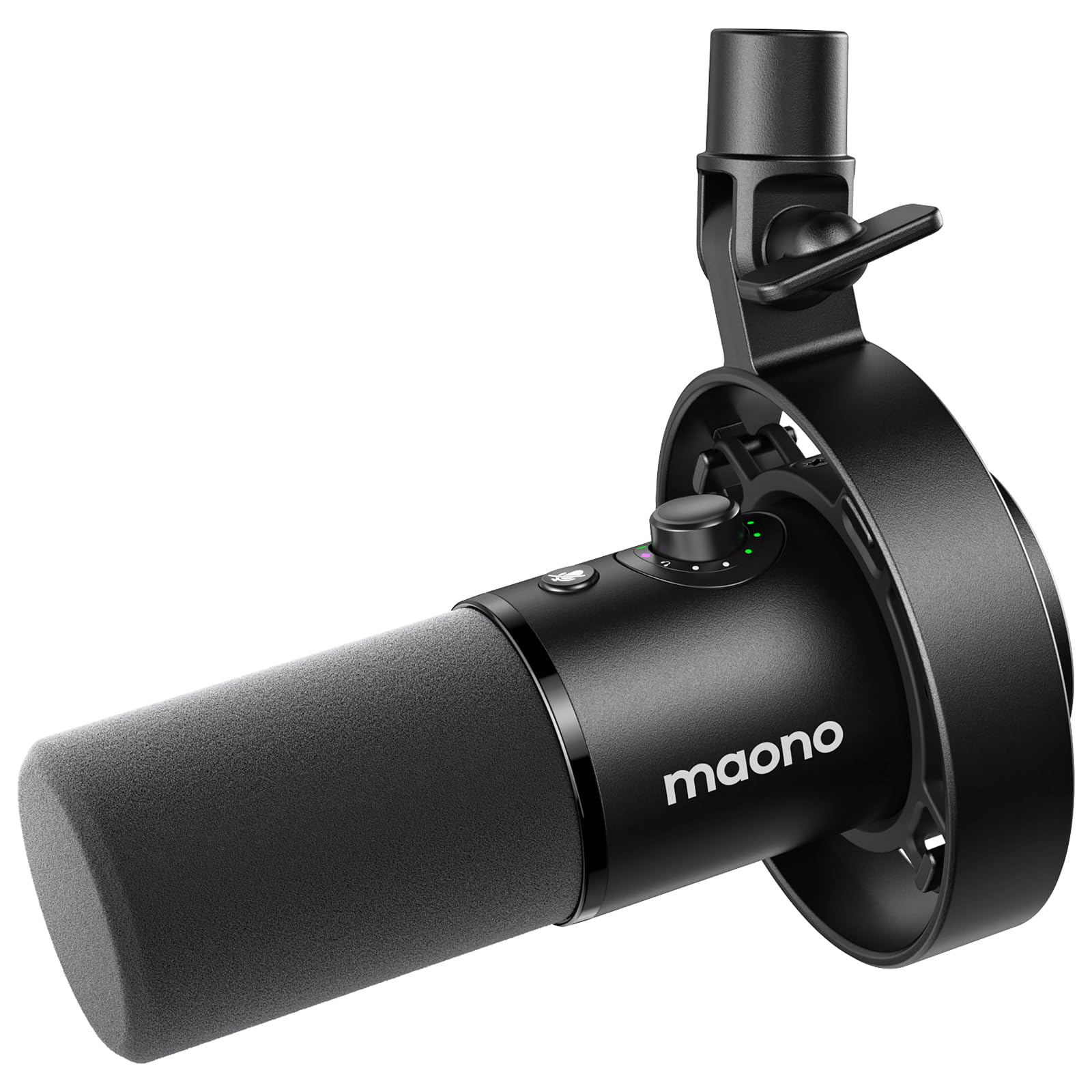
- Connects by USB or XLR.
- MAONO Link includes EQ, limiter, compressor, and high-pass filter controls.
- The 3-in-1 knob controls gain, headphone volume, and monitoring.
Best For: Podcasters and content creators who want USB convenience, XLR routing, and software sound adjustments.
MAONO PD400X
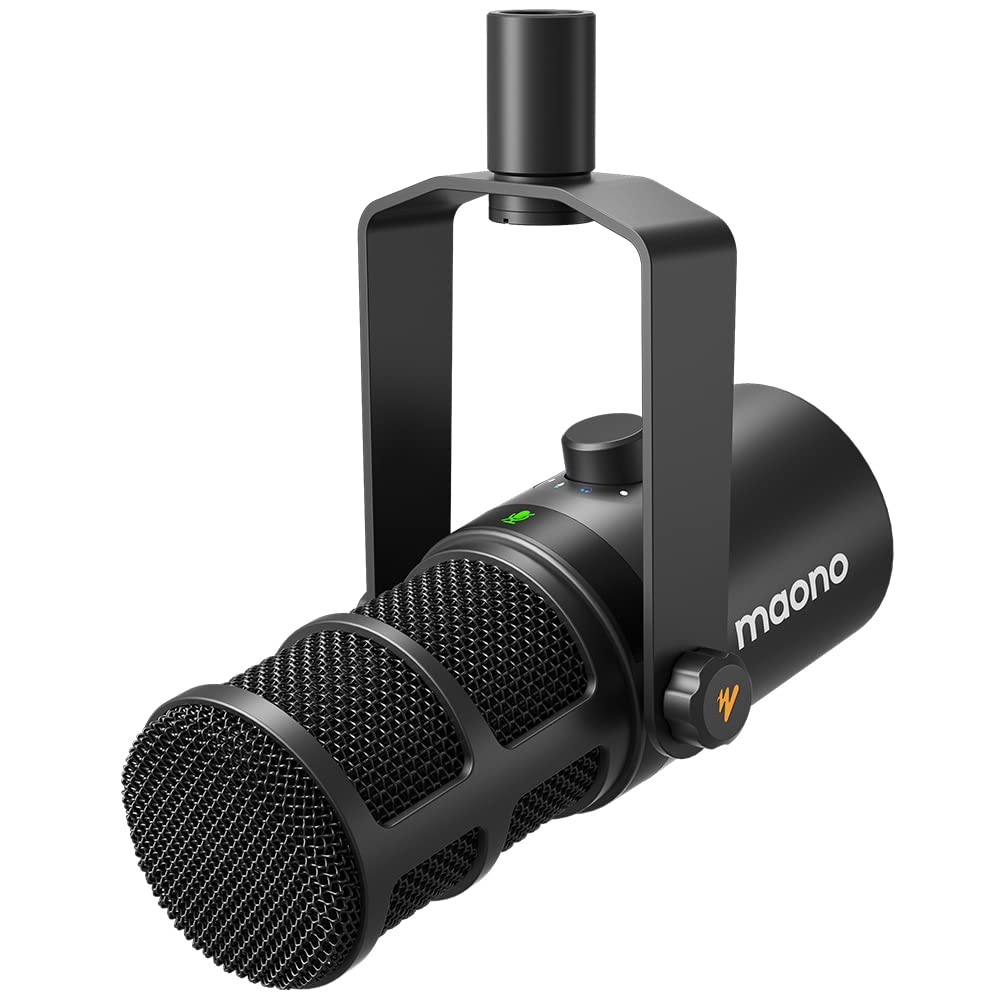
- Provides USB and XLR outputs.
- MAONO Link includes EQ, limiter, compressor, and monitor-mix adjustments.
- A digital knob combines gain, headphone volume, and monitor mix.
Best For: Streamers and podcasters who want USB/XLR flexibility and app-based EQ and monitor controls.
FIFINE AmpliGame AM8T
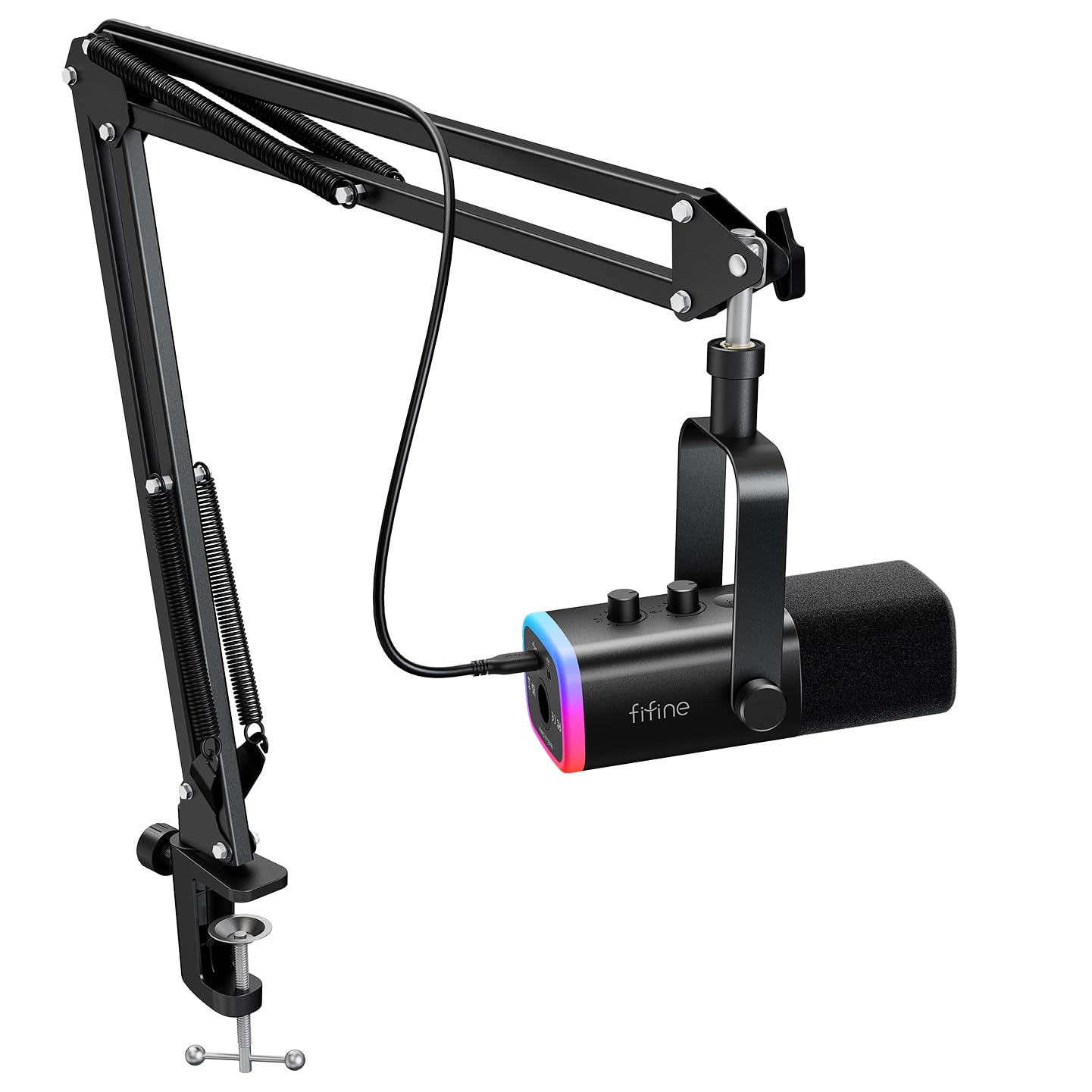
- Supports USB and XLR connections.
- Includes a boom arm with adjustable positioning.
- Has a mute button, gain knob, headphone jack, and headphone-volume control.
Best For: Streamers who want a USB/XLR dynamic mic and an adjustable boom arm in one package.
MAONO PD200XS
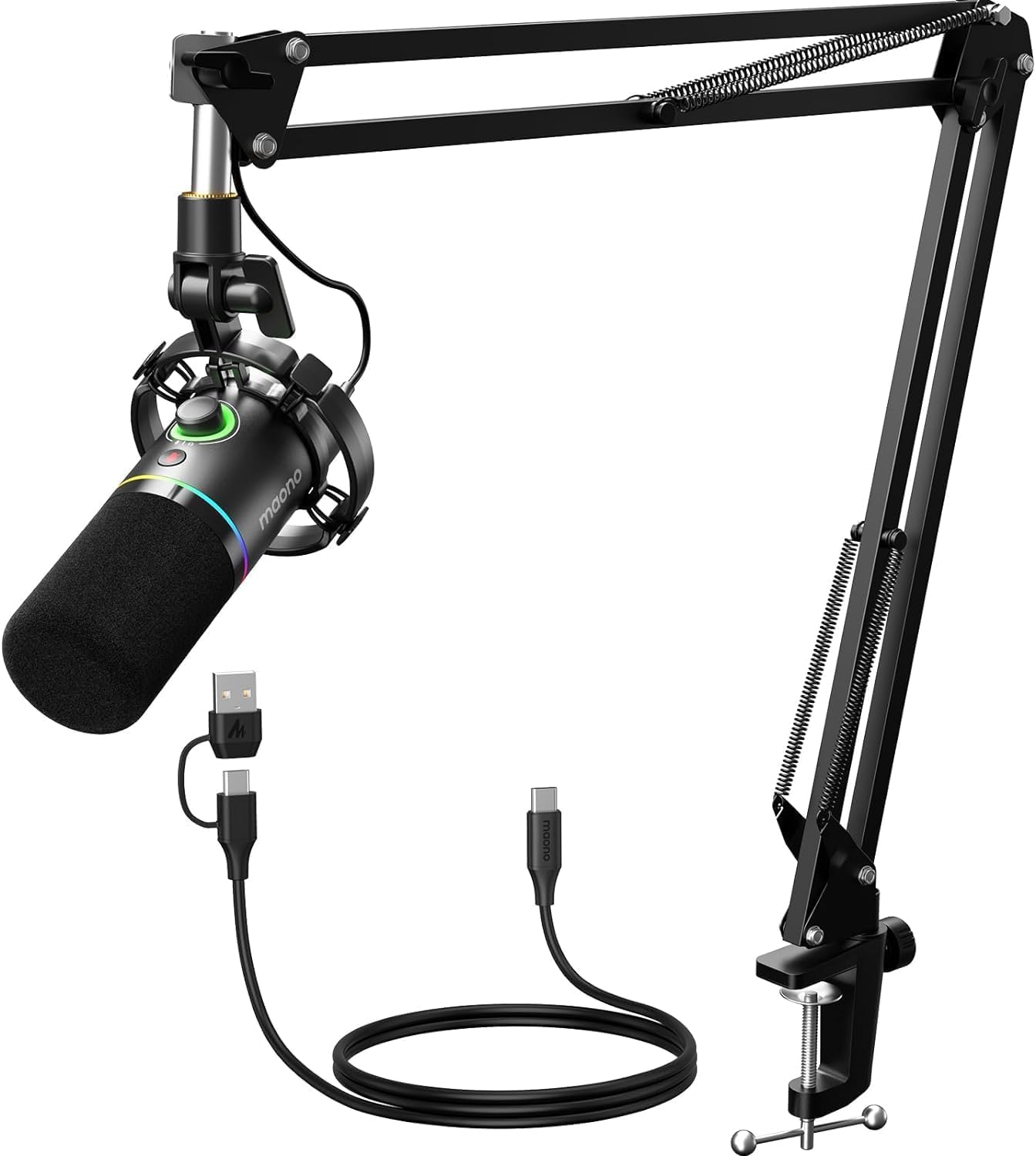
- Includes USB and XLR interfaces and an adjustable boom arm.
- USB software supports EQ, limiter, and compressor adjustment.
- Includes a one-click mute key and 3.5mm headphone jack.
Best For: Podcasters and streamers seeking a dual-connection mic kit with a boom arm and USB sound controls.
FIFINE K669D
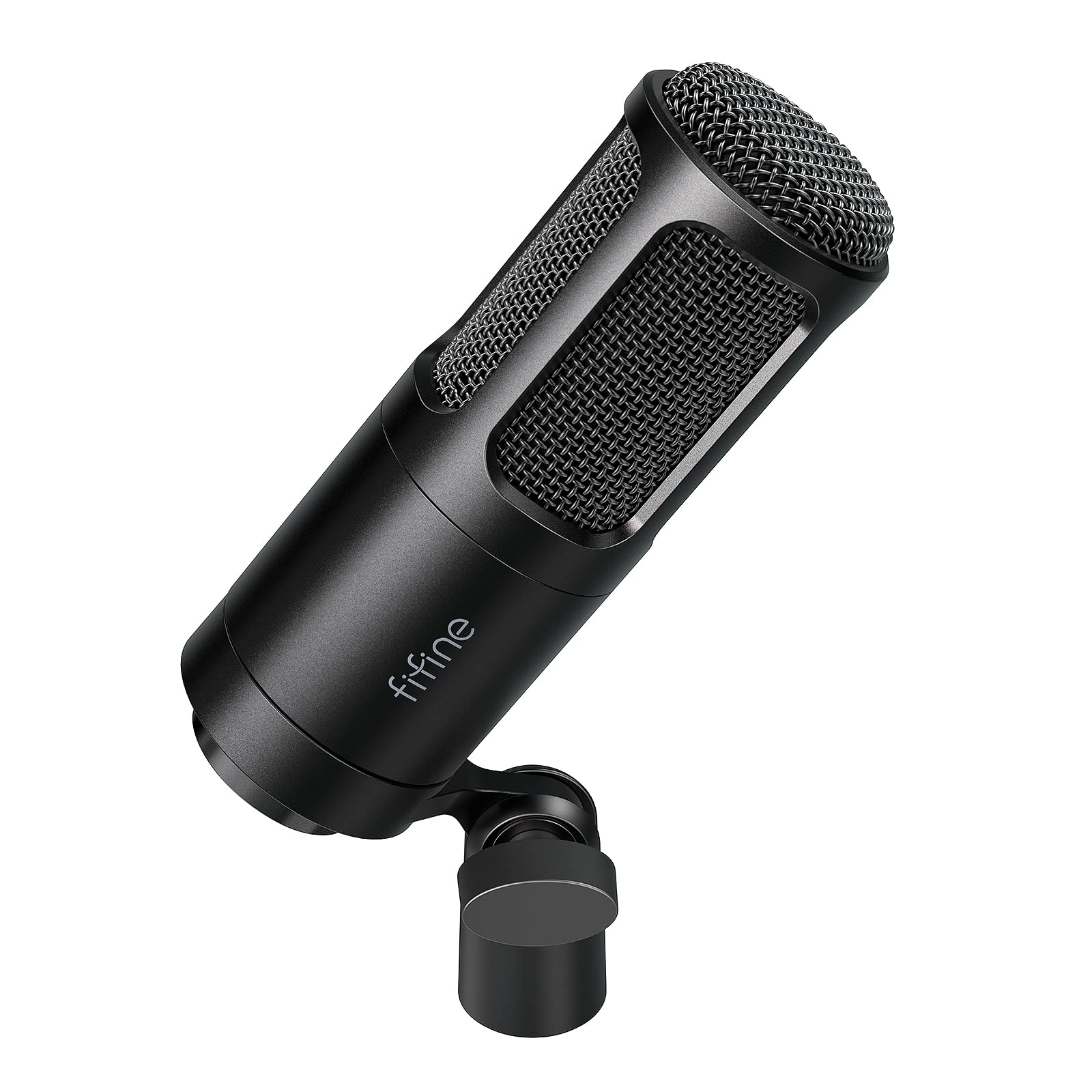
- XLR-only connection for use with an interface or mixer.
- Includes a tripod stand.
- The cardioid pattern and three-layer shockproof design target noise control.
Best For: Home vocal recordists with an interface or mixer who want an XLR mic and included tripod stand.
FIFINE AmpliTank K688
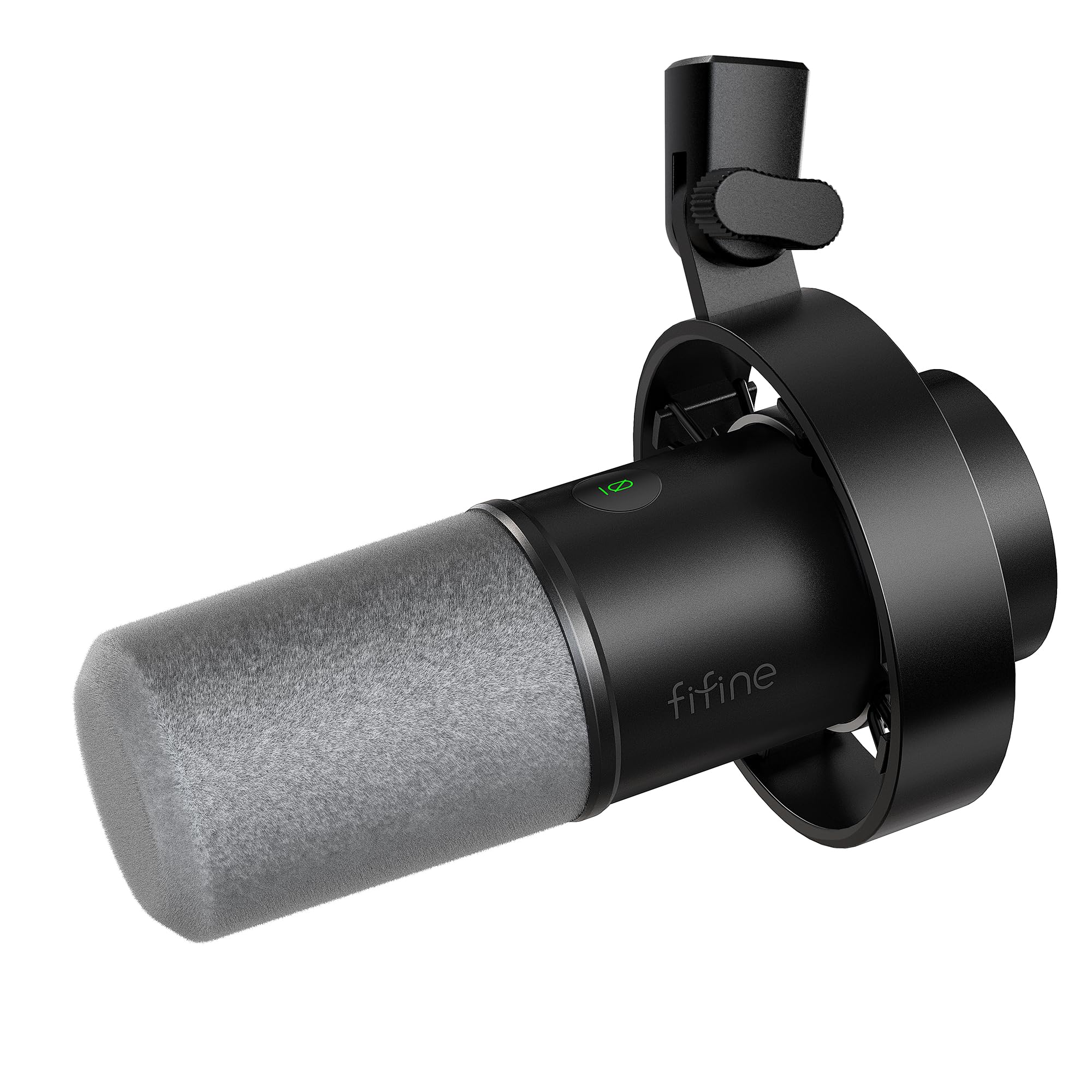
- Provides USB and XLR connections.
- USB mode includes mute, gain, and headphone monitoring controls.
- Includes a shock mount, windscreen, and 8.2 ft USB cable.
Best For: Home podcasters who want USB/XLR options, headphone monitoring, and a shock mount without a boom arm.
FIFINE AmpliTank K688 Pink
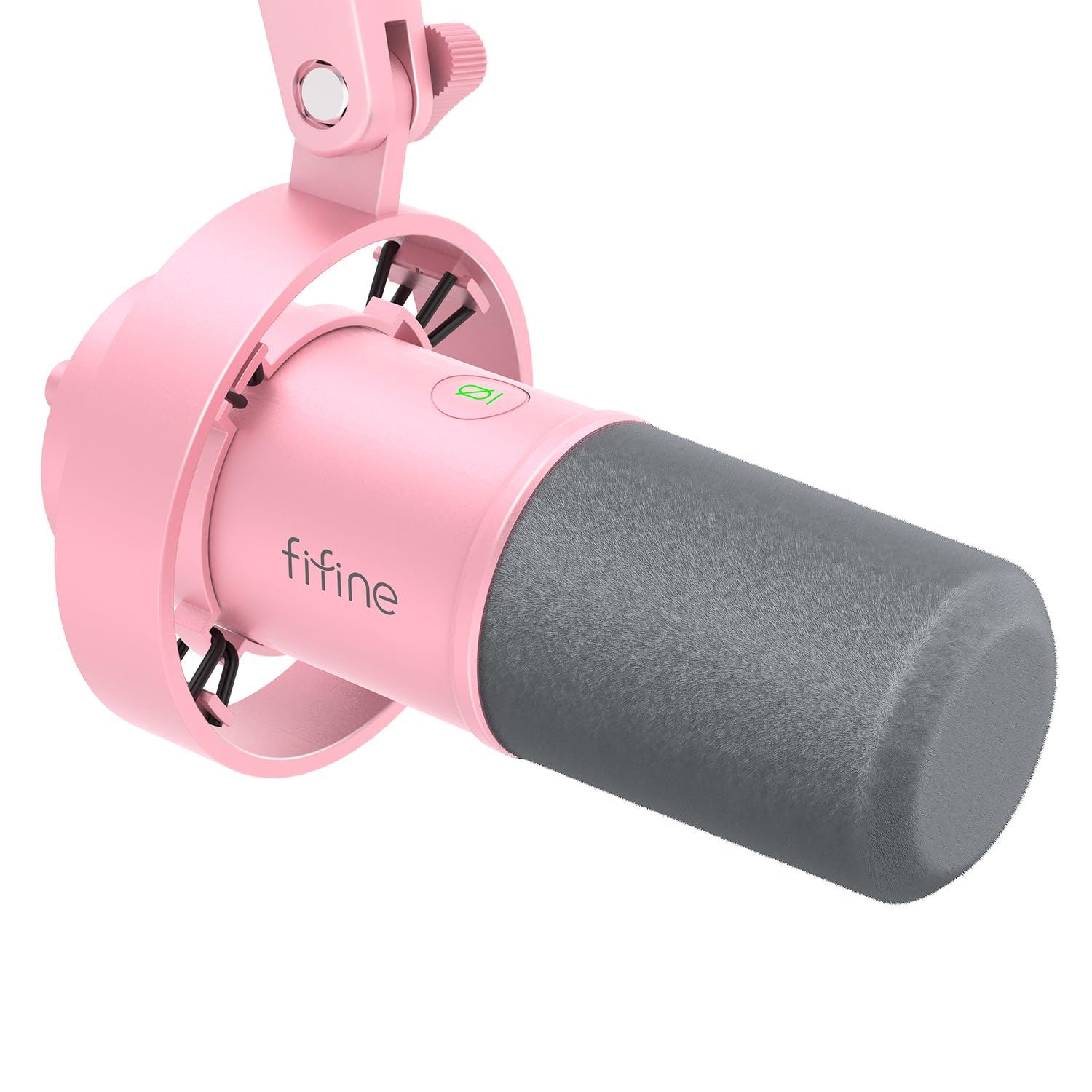
- Supports USB and XLR connections.
- Includes a shock mount and windscreen.
- USB mode provides headphone monitoring and volume adjustment.
Best For: Creators who want a pink dual-connection vocal mic with USB controls and included shock-mount accessories.
Broadcast-Ready Dual Connection
SAMSON Q9U XLR/USB Dynamic Broadcast Microphone
The Samson Q9U combines an XLR analog output with USB-C, making it useful for a home broadcast setup that may later grow into a mixer or interface workflow. Its USB connection records at 24-bit/96kHz, and zero-latency headphone monitoring lets you hear your voice in real time.
A mute switch silences both outputs. The cardioid pattern helps keep ambient sound out of the pickup, while an internal pneumatic shock mount and dual-layer windscreen address mechanical noise and plosives.
It is a substantial feature set for speech and music, but the product details do not identify a stand or cable in the package.
Best For: Home broadcasters and podcasters who want USB-C convenience alongside XLR studio connectivity.
| Pros | Cons |
|---|---|
|
|
Choose the Q9U if you want a broadcast-focused mic that can connect directly to a computer or join an XLR recording chain later. The onboard monitoring and mute controls suit spoken-word work, while the cardioid pattern, shock mount, and windscreen address common room and handling distractions.
Before buying, check whether your setup has a compatible stand and the cables you need; those package details are not specified here. Its documented digital format is 24-bit/96kHz over USB, which may matter if you are comparing computer-recording options.
Software-Tunable Recording Controls
MAONO Dynamic Microphone-XLR USB Podcast Recording Mic: for Vocal Recording, Content Creation, Home Studio, Voiceover, with 192kHz/24bit, Noise Reduction, Mic Gain, Monitoring, Mute (PD300X)
The MAONO PD300X pairs USB and XLR connections with a set of software and physical controls aimed at flexible recording. In USB mode, MAONO Link provides a graphic EQ and tools such as limiters, compressors, and high-pass filters.
The microphone also offers four preset modes and a 3-in-1 knob for gain, headphone volume, and monitoring. Zero-latency monitoring is included, and the product details describe a noise-reduction mode and a foam filter for plosive sounds.
This is a feature-rich fit for someone who wants to shape a podcast or stream signal, but XLR use calls for a mixing or interface setup.
Best For: Podcasters and content creators who want USB convenience, XLR routing, and software sound adjustments.
| Pros | Cons |
|---|---|
|
|
Pick the PD300X if you expect to adjust tone and dynamics in software and want to retain an XLR path for a mixer or console. Its four presets, visual EQ, and combined monitoring knob give more documented control than a basic analog-only handheld mic.
Plan around the USB and XLR difference: the advanced app workflow is described for USB, while XLR connects to external recording equipment. Check the package for mounting hardware and an XLR cable before ordering, since those details are not provided.
App-Based Podcast and Stream Tuning
MAONO Dynamic Microphone, USB/XLR Podcast PC Microphone with Software, EQ,Tap-to-Mute, Headphone Jack, Gain Knob & Volume Control, Studio Mic for Broadcast, Recording, Streaming & Gaming (PD400X)
The MAONO PD400X is a dynamic microphone for studio, home recording, podcasting, and live streaming. Its cardioid pattern is intended to reject unwanted background noise, while the USB connection provides plug-and-play use and access to MAONO Link.
The app includes standard and advanced modes, with controls for gain, monitor mix, EQ, limiter, and compressor. A 3-in-1 digital knob handles gain, headphone volume, and monitor mix, and a tap-to-mute key has an LED indicator.
XLR output is available for an interface, mixer, or portable PA system. The package contents are not detailed, so check separately for the stand and cable you need.
Best For: Streamers and podcasters who want USB/XLR flexibility and app-based EQ and monitor controls.
| Pros | Cons |
|---|---|
|
|
The PD400X fits a creator who wants app-based sound shaping and a direct path to a mixer or portable PA. Its control set covers monitor mix as well as gain and headphone level, which can be useful when balancing a live stream or podcast.
The available details do not identify included mounting hardware or cables, so account for those separately. Choose it for its app workflow and mixed connectivity; a simpler XLR-only option may suit a setup that already handles all sound processing externally.
Boom-Arm Streaming Bundle
FIFINE XLR/USB Gaming Microphone Set, Dynamic PC Mic for Streaming Podcasting, Computer RGB Mic Kit with Boom Arm Stand, Mute Button, Headphones Jack, for Recording Vocal Voice-Over-AmpliGame AM8T
The FIFINE AmpliGame AM8T combines USB and XLR connectivity with a boom arm, making it a ready-to-position choice for a streaming desk. USB supports plug-and-play use with a PC, while XLR connects to a mixer or sound card.
The cardioid pattern and -50dB sensitivity are specified, along with a mute button, gain knob, headphone jack, and headphone-volume control. RGB modes can be changed or turned off at the mic.
The package includes an 8.2 ft USB-to-USB-C cable and desk clamp, but the XLR cable is not included. Check desk thickness as the clamp fits desktops under 2 inches.
Best For: Streamers who want a USB/XLR dynamic mic and an adjustable boom arm in one package.
| Pros | Cons |
|---|---|
|
|
The AM8T suits a streamer who needs a boom arm and wants both a quick USB route and an XLR upgrade path. Its physical controls cover mute, gain, and headphone monitoring, while RGB is adjustable at the mic.
The package detail matters: the boom arm and USB cable are included, but the XLR cable is not. Measure your desk before relying on the clamp, and check your audio interface requirements if you plan to move from USB to XLR.
Boom Arm with Software Effects
MAONO XLR/USB Dynamic Microphone Kit, RGB Podcast Mic with Software, Mute, Gain Knob, Volume Control, Boom Arm for Streaming, Gaming, Voice-Over, Recording-PD200XS Black
The MAONO PD200XS comes as a dynamic microphone kit with USB and XLR connections, a boom arm, shock mount, and USB cable. Its cardioid pattern is designed to emphasize vocals and reduce unwanted background sound.
In USB mode, MAONO Link provides EQ, limiter, and compressor adjustments, and the microphone offers RGB lighting with nine colors. A smart knob controls gain and headphone volume, while a one-click mute key has an LED indicator.
The XLR cable is not included, so the XLR route requires another purchase. This package is well suited to a desk creator who wants the arm included and software options available over USB.
Best For: Podcasters and streamers seeking a dual-connection mic kit with a boom arm and USB sound controls.
| Pros | Cons |
|---|---|
|
|
Choose the PD200XS if you want an included arm and shock mount plus app-based tone controls for USB recording. It offers more desk hardware than a microphone-only model, while XLR remains available for a mixer or interface.
The tradeoff is that MAONO Link features are USB-only and an XLR cable must be sourced separately. Check whether the supplied boom arm fits your desk and whether your chosen recording workflow needs the software controls before buying.
XLR-Only Metal Mic with Tripod
FIFINE XLR Dynamic Microphone, Vocal Podcast Microphone with Cardioid Pattern, Studio Metal Mic for Streaming Voice-Over Dubbing Video Recording, Black-K669D
The FIFINE K669D is an XLR-only dynamic microphone for vocal recording, streaming, voice-over, and video work. It includes a tripod stand and has 3/8-inch and 5/8-inch threads for mic-stand mounting.
Its cardioid pattern is intended to reduce background pickup, and a three-layer shockproof design addresses unwanted vibration. The product details give a 120dB SPL figure and recommend keeping the top of the end-addressing mic toward the source at a recording distance of 1.5 to 4 inches.
It does not include an XLR cable, so plan for that along with an audio interface or mixer.
Best For: Home vocal recordists with an interface or mixer who want an XLR mic and included tripod stand.
| Pros | Cons |
|---|---|
|
|
The K669D fits a budget-conscious vocal setup that already has XLR input hardware and needs a basic stand in the box. Its tripod stand and common mounting threads make placement straightforward, while its end-address design calls for close positioning toward the sound source.
It lacks USB, so computer users need an interface or mixer, and the XLR cable is separate. Confirm your mounting preference and cable inventory before buying.
Dual-Mode Studio Mic with Shock Mount
FIFINE Dynamic Microphone, XLR/USB Podcast Recording PC Microphone for Vocal Voice-Over Streaming, Studio Metal Mic with Mute, Headphone Jack, Monitoring Volume Control, Windscreen-Amplitank K688
This FIFINE AmpliTank K688 offers USB and XLR connections for home podcasting, voice-over, and recording. USB connects directly to a desktop or laptop using the included 8.2 ft cable; XLR supports a mixer or sound card setup.
The cardioid pattern is intended to manage background noise, and the package includes a shock mount and windscreen to address desk vibration and plosives. USB mode provides mute and gain controls plus a headphone jack and monitoring-volume control.
A boom arm, mic stand, and XLR cable are not included, so the buyer needs to supply mounting and analog cabling as appropriate.
Best For: Home podcasters who want USB/XLR options, headphone monitoring, and a shock mount without a boom arm.
| Pros | Cons |
|---|---|
|
|
Choose this K688 when you want the option to record over USB now and use XLR with external gear later. The shock mount, windscreen, and USB cable are included, but mounting hardware is not, so it is less complete as a desk kit than models bundled with an arm or stand.
Its mute, gain, and headphone monitoring controls work in USB mode only. Check the space and mounting hardware available at your desk before choosing this microphone.
Pink Studio Option with USB Monitoring
FIFINE XLR/USB Dynamic Microphone, Studio XLR Vocal Podcast Microphone for Recording, USB Streaming Mic with Mute Button, Gain Knob, Headphones Monitoring for Voice-Over, Video-Amplitank K688 Pink
The pink FIFINE AmpliTank K688 combines XLR and USB connectivity for podcasting, voice-over, and streaming. Its cardioid pattern is intended to reduce environmental noise, while the supplied shock mount and windscreen address desk vibrations and plosive sounds.
USB mode provides a mute button, monitoring headphone jack, and monitoring-volume adjustment; XLR use is intended for an audio interface or mixer. The package includes an 8.2 ft USB-C to USB cable and a 5/8-inch to 3/8-inch adapter, but the XLR cable, boom arm, and mic stand are not included.
This model suits a creator who values the color and already has mounting gear.
Best For: Creators who want a pink dual-connection vocal mic with USB controls and included shock-mount accessories.
| Pros | Cons |
|---|---|
|
|
This K688 color variant makes sense if the pink finish is a meaningful part of the setup and the dual USB/XLR workflow fits your recording needs. It includes a shock mount and windscreen but leaves the stand, boom arm, and XLR cable to you.
The useful control set is USB-specific, so do not count on the mic's mute and monitoring controls when connected through XLR. Compare its package and color with the other K688 option, and choose one offer rather than treating the two as distinct microphone models.
How to Choose Xlr Microphones
How We Picked Best XLR Microphones
This roundup prioritizes microphones that provide an actual XLR connection and have a documented use for vocals, speech, recording, streaming, podcasting, or broadcast work. It includes several formats because XLR buyers have different needs: USB/XLR models for flexible computer and mixer use, XLR-only options for interface-based recording, and a desktop bundle for buyers who need the cable and stand in the box.
The selected set also distinguishes a broadcast microphone with onboard monitoring, software-driven podcast models, and boom-arm kits for streaming desks. Karaoke microphones with 1/4-inch connectors and a USB-only gaming mic do not match a general XLR recording search as directly, while a wireless USB model without XLR falls outside the connection requirement.
Duplicate color variants and same-model offers are excluded to keep the choices distinct.
Comparing Best XLR Microphones
The main difference is how each microphone fits into a recording chain. Samson Q9U, MAONO PD300X, MAONO PD400X, PD200XS, and the FIFINE K688 models combine USB and XLR, so they can connect directly to a computer by USB or route through an interface or mixer by XLR.
The PD100 and FIFINE K669D are XLR-only, making them better matches for a setup that already has compatible input hardware.
The package contents vary as much as the connection choices. The MAONO PD100 includes a desktop stand, base, extender, and XLR cable.
FIFINE AM8T and MAONO PD200XS include boom arms, while the K688 models include shock mounts but no stand or arm. The Samson Q9U's mounting and cable contents are not specified, so verify those needs before purchase.
| Product | Standout features | Best for |
|---|---|---|
| Samson Q9UCheck Price |
| Home broadcasters and podcasters who want USB-C convenience alongside XLR studio connectivity. |
| MAONO PD300XCheck Price |
| Podcasters and content creators who want USB convenience, XLR routing, and software sound adjustments. |
| MAONO PD400XCheck Price |
| Streamers and podcasters who want USB/XLR flexibility and app-based EQ and monitor controls. |
| FIFINE AmpliGame AM8TCheck Price |
| Streamers who want a USB/XLR dynamic mic and an adjustable boom arm in one package. |
| MAONO PD200XSCheck Price |
| Podcasters and streamers seeking a dual-connection mic kit with a boom arm and USB sound controls. |
| FIFINE K669DCheck Price |
| Home vocal recordists with an interface or mixer who want an XLR mic and included tripod stand. |
| FIFINE AmpliTank K688Check Price |
| Home podcasters who want USB/XLR options, headphone monitoring, and a shock mount without a boom arm. |
| FIFINE AmpliTank K688 PinkCheck Price |
| Creators who want a pink dual-connection vocal mic with USB controls and included shock-mount accessories. |
Choosing a Podcast or Home Studio XLR Mic
For spoken-word work, consider how much direct control you want at the microphone. The Samson Q9U has zero-latency headphone monitoring and a mute switch that works across both outputs.
PD400X adds MAONO Link controls for EQ, limiter, compressor, and monitor mix over USB; PD300X similarly offers software tuning and four presets. These features suit creators who want to shape a voice signal while recording rather than depend entirely on later editing.
The K688 variants combine USB and XLR with USB-only mute and monitoring controls, a shock mount, and a windscreen. They can suit a home podcaster with a suitable stand or arm already available.
Check whether the controls you depend on remain available in your chosen connection mode, because several USB/XLR microphones restrict some functions to USB.
Matching XLR Setup to Your Desk and Gear
A boom arm can clear desk space and make mic placement adjustable. The AM8T and PD200XS include arms, though the AM8T clamp is specified for desktops under 2 inches thick.
For a tabletop arrangement, the MAONO PD100 includes a round base, desktop stand, extender, and XLR cable. The K669D includes a tripod stand, while the K688 models require a separately sourced stand or arm.
Before choosing an XLR-only mic, confirm that your interface, mixer, or sound card has an appropriate XLR input. Also check the cable situation: PD100 includes one, but the K669D and K688 models do not.
If you want direct computer connectivity without additional audio gear, choose a model with USB as well as XLR and make sure its USB-only controls cover your workflow.
Who Should Buy Which XLR Microphone?
The Samson Q9U is a sensible fit for a broadcast desk needing both USB-C and XLR with real-time monitoring. Choose the PD300X or PD400X if software sound shaping and monitor controls are a priority.
The PD200XS suits a creator who wants a boom arm in the package, while the FIFINE AM8T adds a desk arm and practical USB controls for streaming.
For a compact XLR desk kit with cable and base, consider the MAONO PD100. The FIFINE K669D fits an XLR-only setup that needs a tripod stand.
The K688 is a flexible USB/XLR choice for someone who already owns mounting hardware and wants a shock mount and windscreen. Match the connection, controls, mounting parts, and included cable to your recording setup before deciding.