This review maono pd100x looks at a dynamic desktop microphone built for gaming, streaming, podcasting, and voice recording.
Its USB and XLR connections give beginners a simple starting point and leave room for a more involved audio setup later.
MAONO PD100X Review Summary
The quick verdict
1,000+ ratings
Read Amazon ReviewsMAONO PD100X
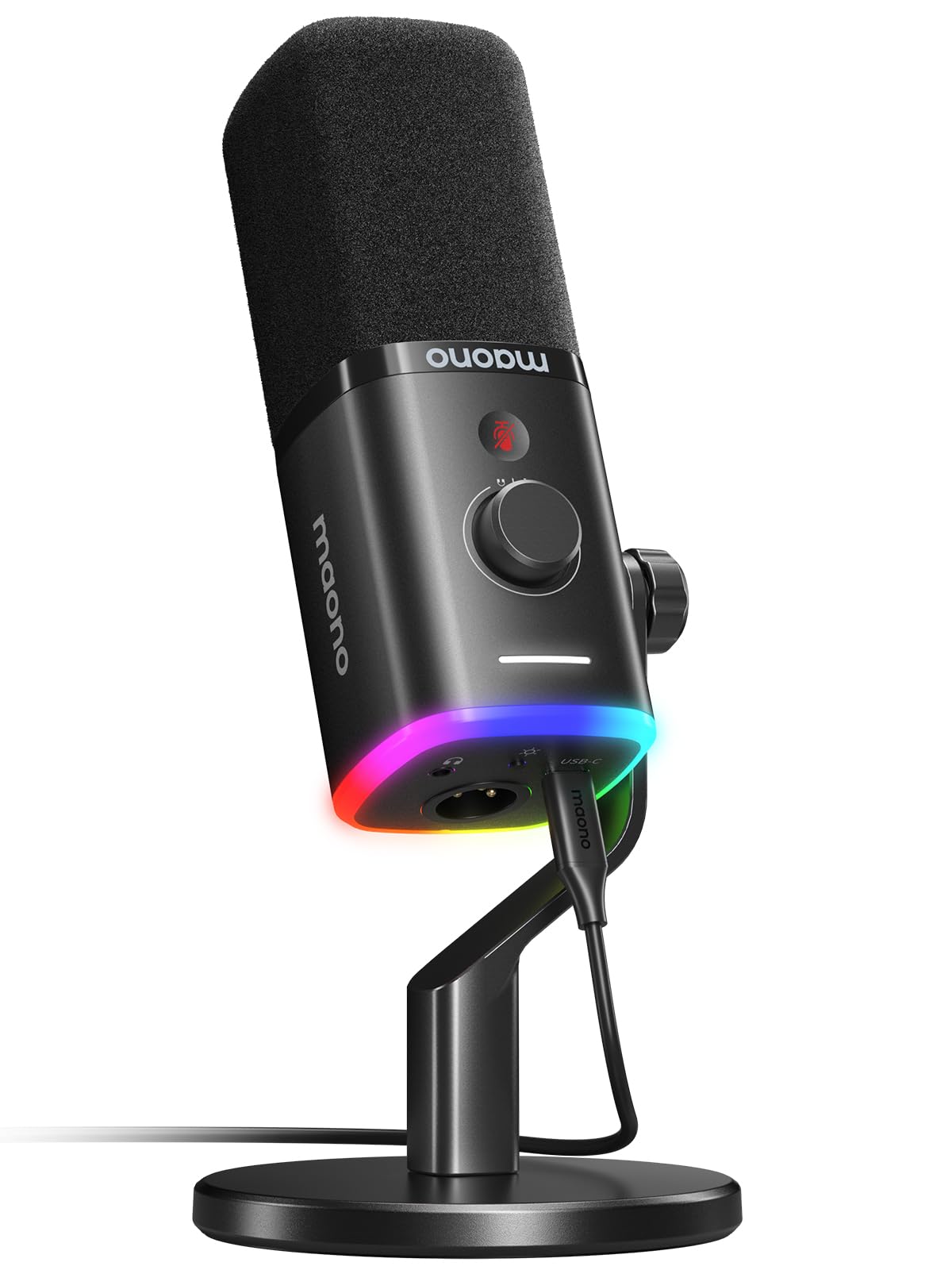
A practical fit for streamers and podcasters who want USB simplicity, XLR flexibility, and hands-on controls in a desktop microphone.
- Dynamic microphone with a customized cardioid capsule and a frequency response of 40 Hz–16 kHz.
- USB and XLR connectivity; XLR use requires a separate cable and an audio interface or mixer.
- USB audio supports 24-bit/48 kHz sampling.
- Tap-to-mute, a combined gain and monitoring knob, and a built-in headphone jack for real-time monitoring over USB.

Pros
- Dual USB and XLR connections can accommodate both a simple computer setup and a compatible audio interface or mixer.
- USB mode puts mute, gain, monitoring volume, and headphone monitoring within reach during a session.
Consider before buying
- RGB, software noise-reduction adjustment, and the microphone's function controls are available only over USB.
- The XLR cable is not included, and XLR operation depends on a compatible interface or mixer.
Read the full review summary
The PD100X combines a cardioid dynamic capsule, USB and XLR connectivity, and a set of useful USB controls: tap-to-mute, gain and monitoring adjustment, headphone monitoring, and customizable RGB lighting.
Its 24-bit/48 kHz sampling and 40 Hz–16 kHz frequency response give buyers clear format and range details to consider for voice-focused use.
It is best suited to someone who records at a desk and values straightforward computer setup, live monitoring, and the option to move to an XLR chain.
The distinction between its connection modes matters: RGB, software noise-reduction adjustment, and the built-in controls are available over USB, while XLR use requires a separate cable and compatible audio interface or mixer.
The buying factors
MAONO PD100X Scorecard
Editorial scores reflect listed features and buyer fit; they are not laboratory measurements or customer ratings.
Connection flexibility
USB and XLR support both plug-and-play computer use and a compatible interface or mixer setup.
Voice-focused design
A dynamic cardioid capsule and 40 Hz–16 kHz response are a sensible feature combination for spoken audio.
USB controls
Tap mute, gain and monitoring adjustment, and headphone monitoring are useful for live desk sessions.
Noise adjustment
The adjustable software noise-reduction level gives USB users control to tailor processing to their environment.
Setup flexibility
USB is designed for plug-and-play use, while XLR allows integration with audio equipment.
RGB customization
Three modes and eight color options offer visual customization, though the feature is limited to USB.
Key Features and Specifications of MAONO PD100X
- Dynamic microphone with a customized cardioid capsule and a frequency response of 40 Hz–16 kHz.
- USB and XLR connectivity; XLR use requires a separate cable and an audio interface or mixer.
- USB audio supports 24-bit/48 kHz sampling.
- Tap-to-mute, a combined gain and monitoring knob, and a built-in headphone jack for real-time monitoring over USB.
- MaonoLink software provides adjustable noise-reduction levels and RGB settings in USB mode.
- Customizable RGB lighting includes three modes and eight color options, with controls for color and brightness.
Pros and Cons of MAONO PD100X
Pros
- Dual USB and XLR connections can accommodate both a simple computer setup and a compatible audio interface or mixer.
- USB mode puts mute, gain, monitoring volume, and headphone monitoring within reach during a session.
- The adjustable software noise-reduction level lets USB users tailor processing to their recording environment.
- RGB lighting can be customized or switched off to suit different desk setups.
Consider before buying
- RGB, software noise-reduction adjustment, and the microphone's function controls are available only over USB.
- The XLR cable is not included, and XLR operation depends on a compatible interface or mixer.
- The 40 Hz–16 kHz response is voice-oriented; buyers planning broader recording uses should check whether that range suits their sources.
Who Should Buy MAONO PD100X?
Good fit
Consider the PD100X if you want one desk microphone that can start as a USB device and later connect through XLR to an interface or mixer.
That makes its dual connection format useful for creators whose setup may grow over time.
It also suits streamers and podcasters who value immediate access to mute and level controls, plus headphone monitoring while recording or chatting.
The RGB options are a bonus for a USB gaming setup, and MaonoLink adds adjustable noise reduction for users who want to tune that processing.
Before choosing it, decide which connection you expect to use most. USB unlocks the full set of controls and software features; for XLR, budget for a separate cable and make sure your audio equipment has the right connection.
Who should skip it
Look elsewhere if you need the microphone's RGB, software noise-reduction settings, and on-mic controls to work through an XLR connection. Those functions are specified for USB use.
It may not be the best match if your recording needs depend on a frequency range beyond 40 Hz–16 kHz or on equipment outside a desktop, interface, or mixer workflow.
Confirm that the connection and stated range fit your intended sources before buying.
How the MAONO PD100X fits a streaming setup
Two connection paths, with different features
USB is the direct route for a beginner who wants plug-and-play use and access to mute, gain, monitoring, RGB, and MaonoLink settings.
XLR opens a route into a mixer or audio interface, but the cable is separate, and the USB-only functions should not be part of the XLR buying case.
Controls built around live use
A tap-to-mute key and a knob that handles gain and monitoring volume address small adjustments that come up while gaming, chatting, or recording.
The headphone jack supports real-time monitoring, so a buyer can listen while working rather than relying only on the computer's output.
Noise reduction is adjustable over USB
The cardioid capsule is intended to focus on voice, and the MaonoLink software offers adjustable noise reduction for USB sessions.
That is a useful way to tailor processing to a room, but it does not establish a particular result in every environment; buyers should expect to adjust the setting to their own setup.
Voice range and visual customization
The 40 Hz–16 kHz response and 24-bit/48 kHz sampling are concrete specifications for evaluating spoken-word use.
RGB customization adds a visual element through three modes and eight colors, with brightness adjustment or the option to turn the lights off; this feature, too, depends on USB.
Alternatives to MAONO PD100X
Instrument Dynamic Microphones alternative
1,000+ ratings
Read Amazon ReviewsMAONO PD100XS
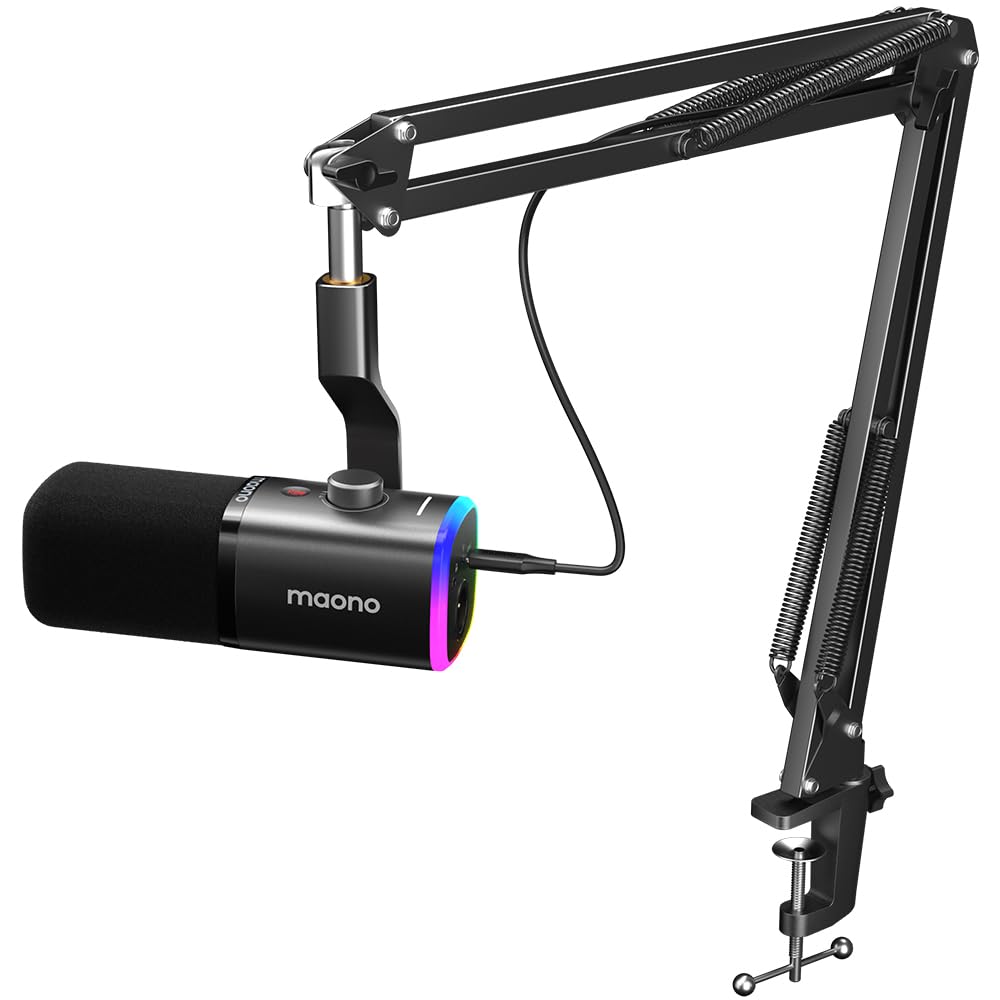
Compare the PD100XS if a boom-arm setup is a priority and its listed lighting options suit your desk.
The PD100X is the clearer fit when you want the desktop microphone format described here; choose based on how you plan to mount and position the mic.
- The PD100XS is also a dynamic USB/XLR microphone with USB-only noise reduction and controls, but its supplied description pairs it with a boom arm and lists nine RGB color options.
- The PD100X is a desktop USB/XLR dynamic microphone with USB-only RGB, software noise reduction, and on-mic mute and monitoring controls.
Instrument Dynamic Microphones alternative
800+ ratings
Read Amazon ReviewsMAONO PD200W
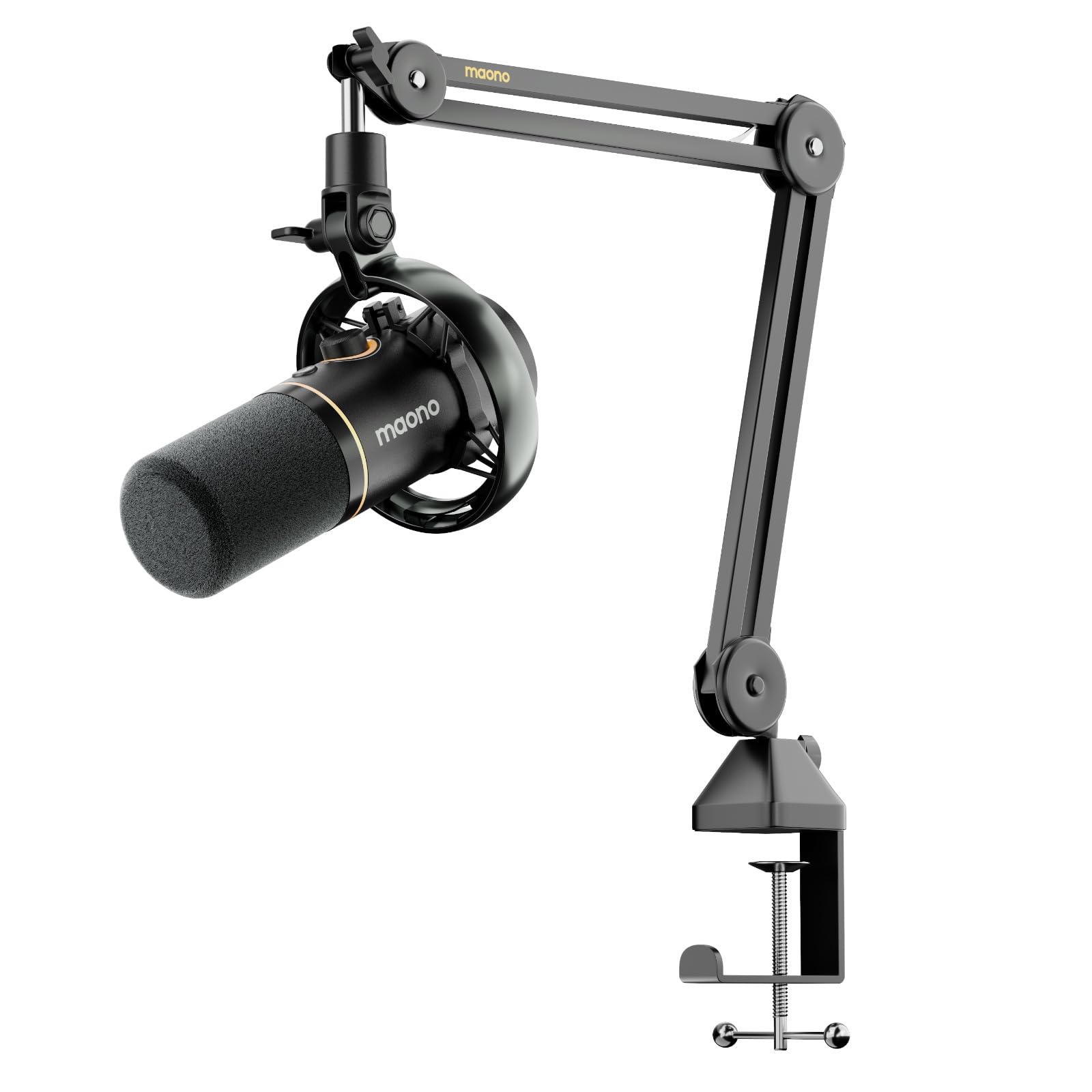
Consider the PD200W if wireless placement or recording two speakers separately is central to your workflow. The PD100X is the more straightforward match if you want a desktop USB/XLR microphone and do not need those wireless features.
- The PD200W adds wireless connectivity alongside USB and XLR, and its kit includes a boom arm and receiver.
- It also supports connecting two wireless microphones to one receiver for separate-track recording.
- The PD100X offers USB and XLR connections, with its described controls and RGB features available in USB mode.
Is MAONO PD100X Worth It?
The MAONO PD100X is worth considering for desk-based streaming, podcasting, and voice recording if you want USB convenience with an XLR upgrade path.
Its cardioid dynamic design, headphone monitoring, and accessible USB controls make it a practical feature set for live sessions.
Buy it with a clear understanding of the connection split: the mute and monitoring controls, noise-reduction adjustment, and RGB customization are USB features, while XLR requires a separate cable and compatible equipment.
If that matches your setup, the PD100X offers useful flexibility without making the workflow complicated.
Your review at a glance
1,000+ ratings
Read Amazon ReviewsMAONO PD100X
A practical fit for streamers and podcasters who want USB simplicity, XLR flexibility, and hands-on controls in a desktop microphone.
- Dynamic microphone with a customized cardioid capsule and a frequency response of 40 Hz–16 kHz.
- USB and XLR connectivity; XLR use requires a separate cable and an audio interface or mixer.
- USB audio supports 24-bit/48 kHz sampling.
- Tap-to-mute, a combined gain and monitoring knob, and a built-in headphone jack for real-time monitoring over USB.