This FIFINE AmpliGame AM8 review looks at a dynamic microphone that pairs direct USB setup with an XLR path for creators planning a more involved recording chain.
AmpliGame AM8 Review Summary
The quick verdict
11,000+ ratings
Read Amazon ReviewsFIFINE AmpliGame AM8
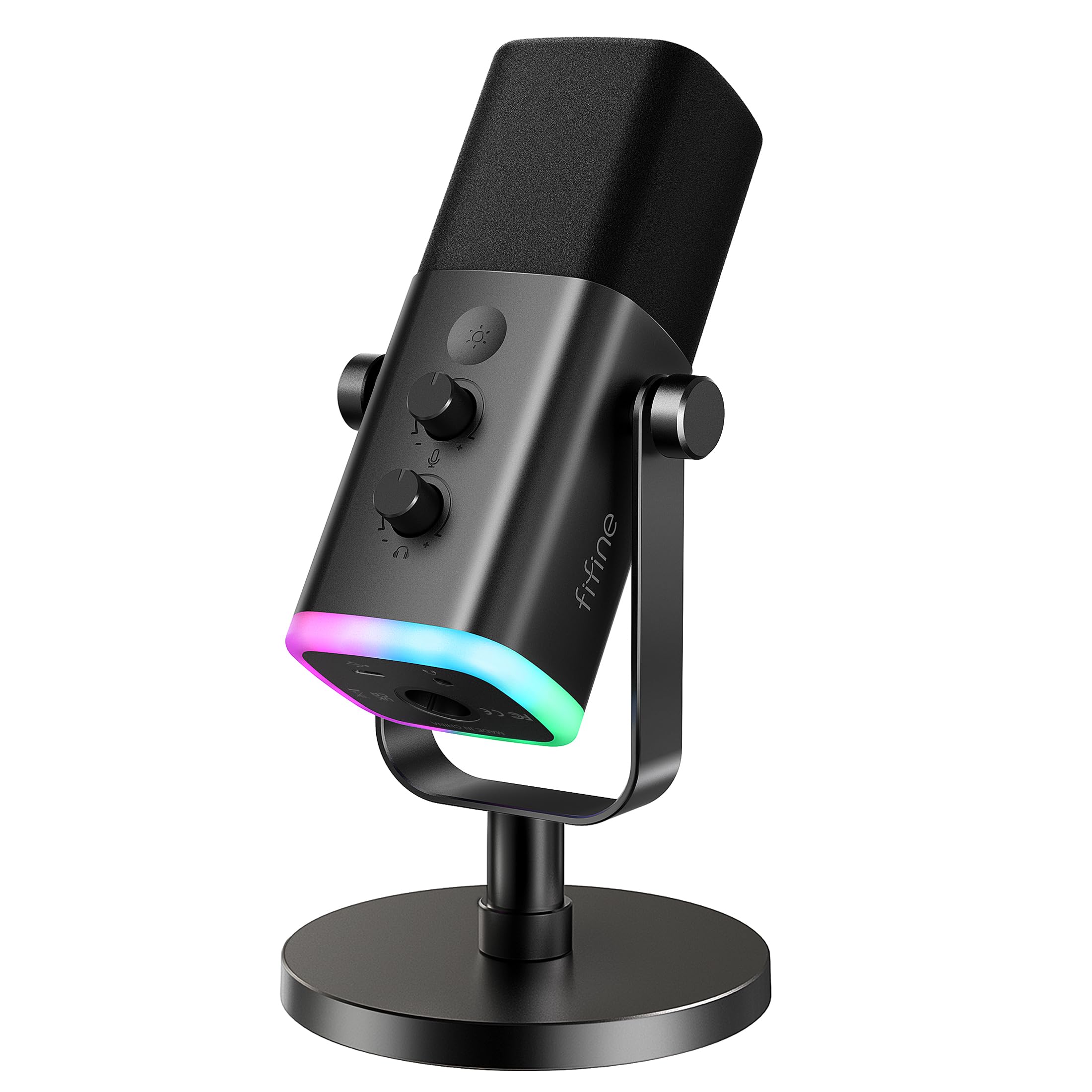
A flexible USB/XLR desktop microphone for creators who want simple USB controls and gaming desk lighting, with some features limited to USB mode.
- Dynamic cardioid microphone with a stated frequency response of 50Hz–16KHz.
- USB connection supports direct computer use and tap-to-mute, with an LED mute reminder.
- XLR connection requires a separate cable and an audio interface or mixer.
- USB-only RGB lighting has three modes and more than ten colors, plus memory for the previous selection.

Pros
- USB connection is designed for direct computer use, making it accessible for a simple desktop setup.
- Tap-to-mute works independently of computer programs and has an LED reminder.
Consider before buying
- The XLR cable is separate, and XLR use requires an audio interface or mixer, adding setup pieces for that connection path.
- RGB lighting and the function key do not operate over XLR, so those desk controls are tied to USB use.
Read the full review summary
The AM8 is aimed at gaming, streaming, podcasting and vocal recording, with USB connection for straightforward computer use and XLR output for an audio interface or mixer.
Its cardioid pickup and end-address design make placement part of the setup: point the top toward the sound source and keep the recommended recording distance in mind.
It suits a desktop creator who values tap-to-mute, headphone monitoring and adjustable RGB while using USB.
The main compromise is mode dependence: RGB and the function key are unavailable over XLR, so buyers building around an interface should focus on the microphone connection rather than its USB-oriented desk controls.
The buying factors
AmpliGame AM8 Scorecard
Editorial scores reflect listed features and buyer fit; they are not laboratory measurements or customer ratings.
Connection flexibility
USB supports direct computer connection, while XLR provides a route to an interface or mixer; the XLR cable must be supplied separately.
USB controls
Tap-to-mute, a mute reminder, gain control and monitoring volume adjustment give USB users several convenient controls.
Desk lighting
USB mode offers three RGB modes and more than ten light colors, with memory for the selected lighting setting.
Monitoring access
A headphone jack and monitoring volume control support checking the live voice feed while recording or gaming.
Mounting compatibility
Built-in 3/8-inch and 5/8-inch threads are designed to fit most microphone stands without an external adapter.
Mode consistency
Several desk-oriented functions, including RGB and the function key, are limited to USB, which narrows their usefulness in an XLR setup.
Key Features and Specifications of AmpliGame AM8
- Dynamic cardioid microphone with a stated frequency response of 50Hz–16KHz.
- USB connection supports direct computer use and tap-to-mute, with an LED mute reminder.
- XLR connection requires a separate cable and an audio interface or mixer.
- USB-only RGB lighting has three modes and more than ten colors, plus memory for the previous selection.
- Headphone jack, monitoring volume control and microphone gain knob are available over USB.
- Built-in 3/8-inch and 5/8-inch metal threads support most mic stands; a windscreen is included.
Pros and Cons of AmpliGame AM8
Pros
- USB connection is designed for direct computer use, making it accessible for a simple desktop setup.
- Tap-to-mute works independently of computer programs and has an LED reminder.
- USB lighting offers multiple modes and colors with memory for the selected setting.
- The headphone jack and control knobs provide on-mic access to monitoring level and gain in USB mode.
Consider before buying
- The XLR cable is separate, and XLR use requires an audio interface or mixer, adding setup pieces for that connection path.
- RGB lighting and the function key do not operate over XLR, so those desk controls are tied to USB use.
- The recommended recording range is close, at 2 to 6 inches, so placement needs attention at the desk.
Who Should Buy AmpliGame AM8?
Good fit
Choose the AM8 if you want a desktop dynamic mic for gaming, streaming or podcasting and value direct USB connection, on-mic muting and adjustable RGB.
It also makes sense if you may move to an interface-based setup later and are prepared to add an XLR cable, while keeping in mind that USB-only controls will not carry over to that connection.
Who should skip it
Skip it if your preferred workflow depends on RGB lighting or the function key while connected through XLR; those functions are inactive in that mode.
It is also a poor fit if you need an XLR microphone package with its cable already included, since the XLR cable is separate.
AmpliGame AM8: USB Controls Meet XLR Flexibility
USB is the feature-rich mode
The AM8’s most distinctive conveniences sit on its USB path: direct computer connection, tap-to-mute, RGB controls, headphone monitoring and gain adjustment.
That makes it easier to build around as a gaming or streaming desk microphone, while preserving a mute reminder for live sessions.
XLR is an upgrade path with conditions
XLR opens the option to connect through an interface or mixer, but the cable is not included and USB features such as RGB and the function key are inactive.
Treat the two connections as different workflows when planning a desk or studio setup.
Placement and mounting matter
The microphone is end-addressing, and the top should face the source; the suggested recording range is 2 to 6 inches.
Its built-in thread sizes accommodate most mic stands, so the practical question is whether a close desktop position suits your speaking arrangement.
A focused voice-oriented pickup design
A cardioid dynamic design is intended to reject off-axis noise, while the stated frequency response spans 50Hz–16KHz.
Those details describe its pickup approach and range; they do not replace checking whether the mic suits your room, voice and recording chain.
Alternatives to AmpliGame AM8
Multipurpose Dynamic Microphones alternative
5,000+ ratings
Read Amazon ReviewsSamson Q2U Dynamic USB-C/XLR Microphone
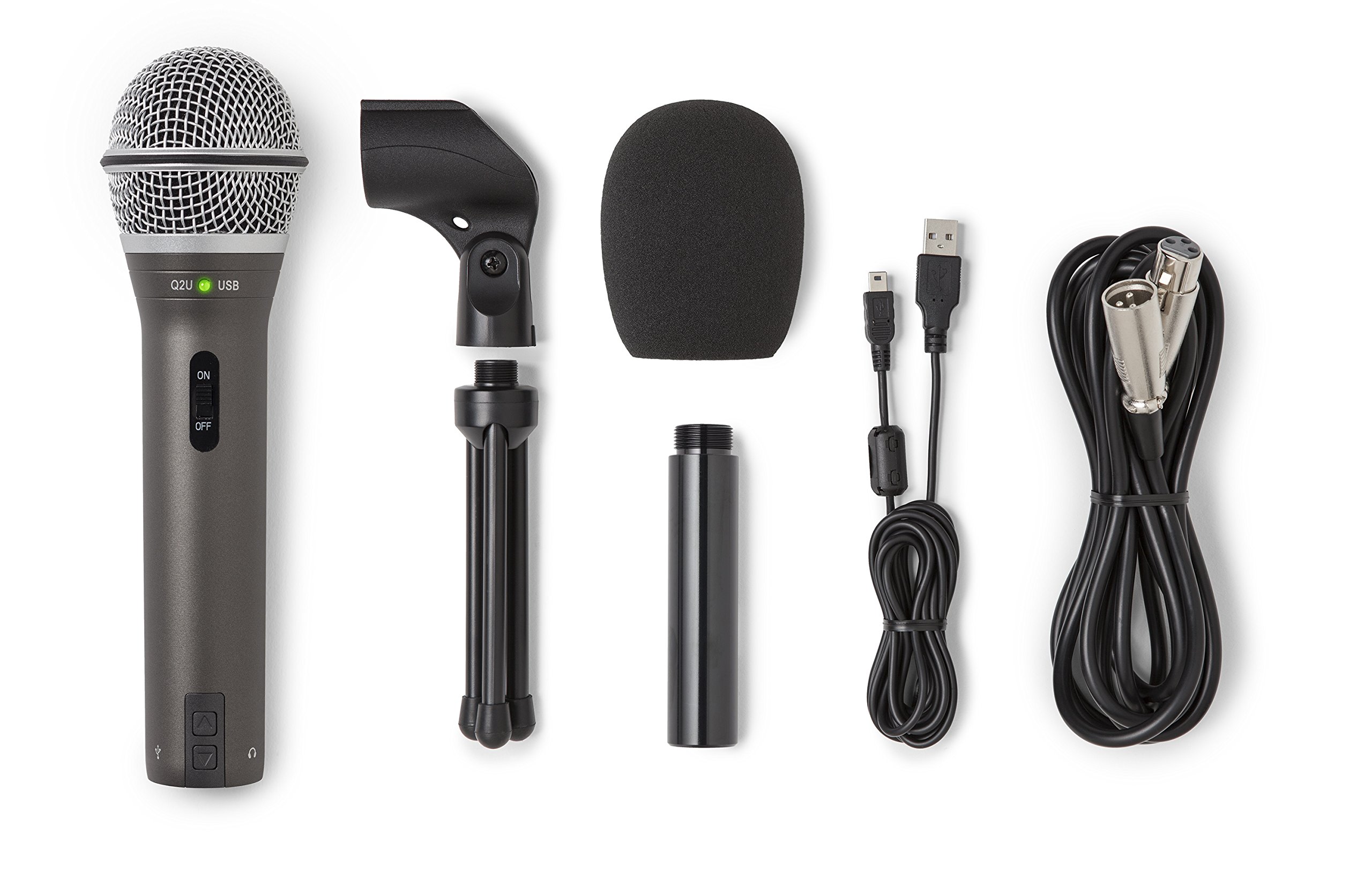
Choose the Q2U if you prefer a handheld format and want a package with both connection cables and basic stand accessories; choose the AM8 if USB gaming-desk controls such as tap-to-mute and RGB are more useful to your setup.
- The Q2U is a handheld dynamic mic with USB-C and XLR plugs, and its package includes both USB-C and XLR cables, a mic clip, windscreen and tripod stand components.
- The AM8 is a desktop-oriented gaming and streaming microphone with USB tap-to-mute and RGB controls, while its XLR cable is separate.
Multipurpose Dynamic Microphones alternative
600+ ratings
Read Amazon ReviewsSAMSON Q9U XLR/USB Dynamic Broadcast Microphone
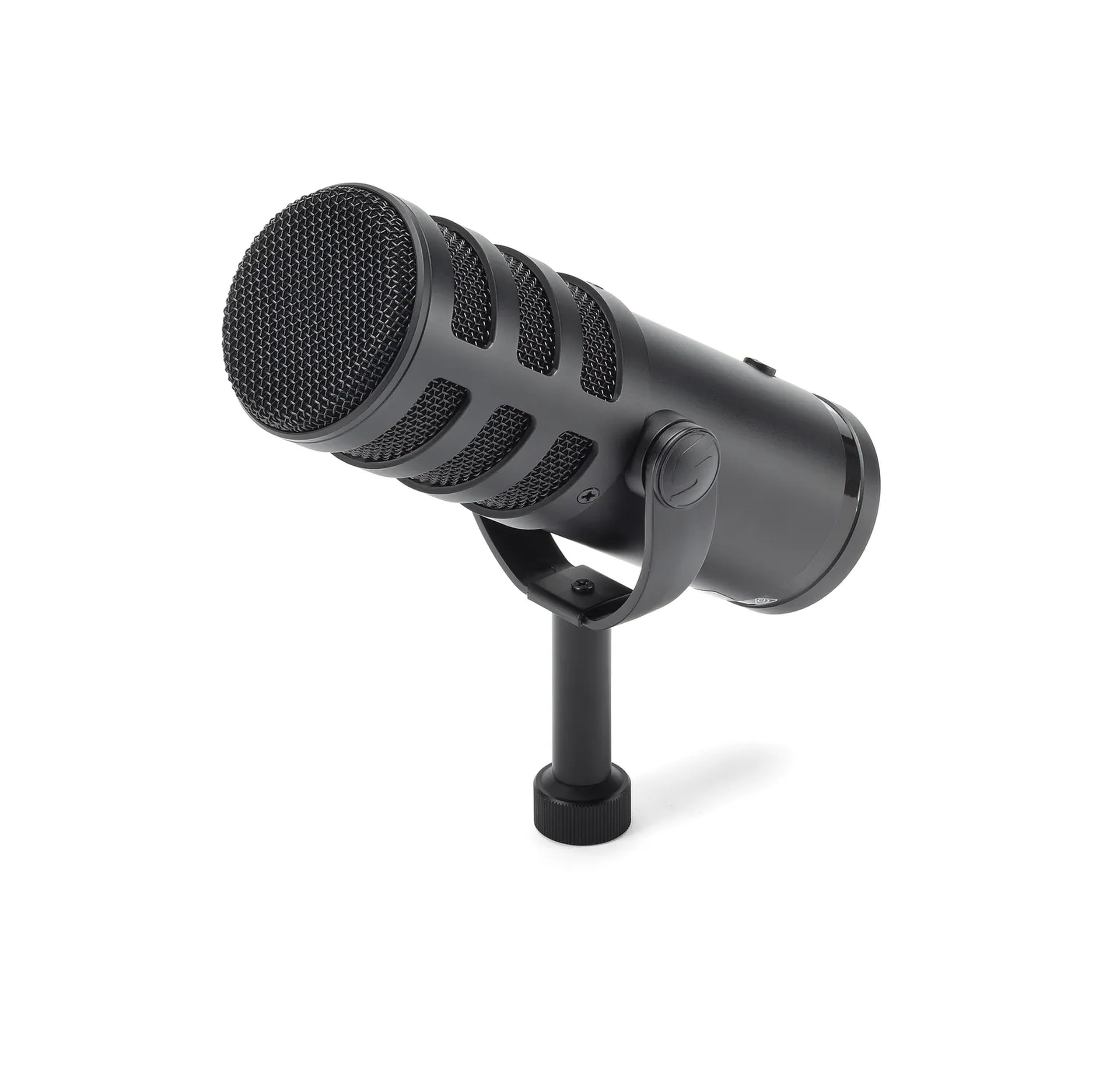
Prefer the Q9U if USB-C recording resolution and headphone monitoring are priorities and you want its mute switch to work on both connection outputs; the AM8 better suits a USB gaming desk built around RGB and tap-to-mute.
- The Q9U pairs XLR with USB-C digital recording at 24-bit/96kHz and offers zero-latency headphone monitoring; its mute switch silences both outputs.
- The AM8 provides USB tap-to-mute, headphone monitoring and RGB lighting for desktop use, but RGB and the function key are inactive over XLR.
Is AmpliGame AM8 Worth It?
The FIFINE AmpliGame AM8 is worth considering if you want one dynamic microphone for a USB gaming or streaming desk today and the option of XLR connection later.
Its practical strengths are direct USB use, tap-to-mute, RGB, monitoring controls and stand threading; the XLR path requires a separate cable and does not retain the USB lighting and function key.
Buy it when those USB conveniences match how you record and you can work close to an end-address microphone.
If you mainly want an interface-driven setup, account for the additional cable and decide whether the USB-specific controls still justify this model for your desk.
Your review at a glance
11,000+ ratings
Read Amazon ReviewsFIFINE AmpliGame AM8
A flexible USB/XLR desktop microphone for creators who want simple USB controls and gaming desk lighting, with some features limited to USB mode.
- Dynamic cardioid microphone with a stated frequency response of 50Hz–16KHz.
- USB connection supports direct computer use and tap-to-mute, with an LED mute reminder.
- XLR connection requires a separate cable and an audio interface or mixer.
- USB-only RGB lighting has three modes and more than ten colors, plus memory for the previous selection.